
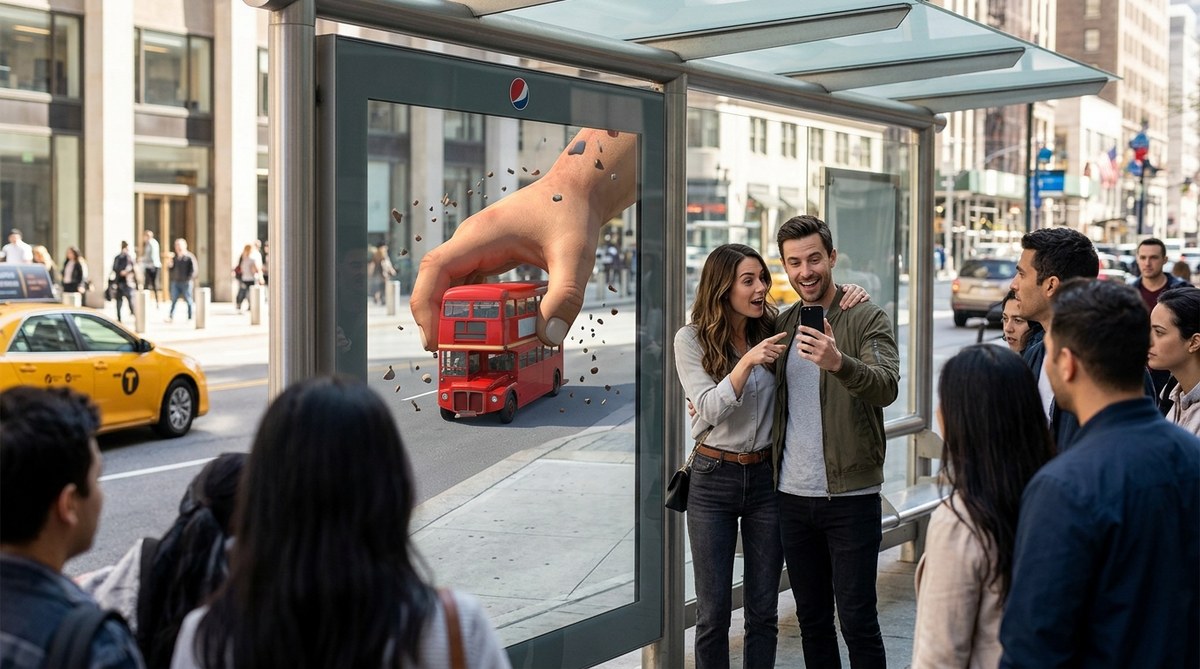
Harnessing the power of augmented reality (AR) can elevate a brand’s visibility and engagement in ways traditional advertising cannot match. Pepsi’s recent AR bus shelter stunt stands out as a prime example of how creativity combined with technology can produce staggering organic results. By integrating interactive AR experiences into an everyday setting like a bus shelter, Pepsi managed to captivate millions without relying on paid advertisements. This case not only demonstrates the potential of AR in marketing but also provides actionable insights for brands eager to explore this frontier.
Pepsi’s AR bus shelter stunt exemplifies how innovative, interactive AR campaigns can generate massive organic reach. It shows that [engaging visuals and user participation](https://www.cdc.gov/healthcommunication/toolstemplates/entertainmented/index.html) are key to viral success, especially when integrated into familiar public spaces without heavy media spend.
How the Pepsi AR bus shelter stunt captured attention
Pepsi’s campaign took a simple idea — transforming a bus shelter into an interactive AR experience — and turned it into a viral phenomenon. The stunt involved overlaying augmented reality visuals onto the real-world bus shelter, allowing passersby to see animated effects, playful graphics, and interactive elements through their smartphones. The campaign was designed to be fun, shareable, and easy to access, ensuring that everyday commuters could participate effortlessly.
The result? A staggering six million organic views on platforms like YouTube and social media within just a few days. No paid ads or influencer partnerships were necessary. The campaign relied solely on the inherent shareability of the AR experience and the curiosity it sparked among users. This approach showcases how AR can become a powerful tool for brands seeking organic reach and genuine engagement.
Breaking down the success of the campaign
1. Creating an engaging AR experience
The core of the campaign was an AR filter that commuters could activate via their smartphones. The visuals were vibrant, humorous, and aligned with Pepsi’s brand identity. The AR effects interacted with the environment — such as animated bottles popping up or playful characters dancing around the bus shelter. Making the AR experience fun and easy to use encouraged users to share their interactions.
2. Seamless integration into everyday life
Placing the AR experience in a common public space like a bus shelter increased visibility. People naturally stopped, looked, and interacted. The campaign capitalized on the high foot traffic of urban areas. The AR overlay felt natural and immersive, making it more likely for passersby to share their experience online.
3. Encouraging user participation
Pepsi designed the AR filter to be simple enough for anyone to use. They included instructions that appeared on the screen, guiding users to activate the AR effect. The campaign also prompted users to share their videos with a specific hashtag, increasing organic spread.
4. Leveraging social sharing and virality
The campaign was optimized for sharing. Users loved the playful visuals and wanted to show their friends. The use of a memorable hashtag made tracking and amplifying user-generated content easier. The result was a viral loop — more people saw the videos and wanted to create their own.
Practical steps to replicate this success
Brands interested in similar campaigns can follow these steps:
- Identify a high-traffic location: Think of bus stops, train stations, or busy sidewalks where foot traffic is consistent.
- Design a fun, shareable AR filter: Use accessible AR tools like Spark AR or Effect House to craft effects that align with your brand and are easy to use.
- Ensure ease of access: Make sure users can activate the AR with minimal effort, with clear instructions.
- Encourage sharing: Incorporate prompts or hashtags that motivate users to post their experiences.
- Leverage organic reach: Focus on creating content that users want to share naturally, without paid promotion.
Techniques to maximize organic engagement
| Technique | Description | Common mistakes |
|---|---|---|
| Visual appeal | Use bright colors and playful elements | Overloading visuals, making them confusing |
| Simplicity | Keep interactions straightforward | Creating complex effects that frustrate users |
| Environment interaction | Make effects react to real-world surroundings | Ignoring lighting or space constraints |
| Clear CTA | Prompt users to share or tag | Vague instructions that confuse users |
Expert tip: “The most memorable AR campaigns are those that make users feel like part of a fun, shareable story. Focus on creating effects that are simple to activate and visually captivating.”
Lessons learned from the Pepsi campaign
This campaign demonstrates that AR can be a cost-effective way to generate buzz. It relies on the principle that people love to share unique, entertaining content. When designing your own AR stunt, prioritize user experience and shareability. Think about how your effects will look in real-world settings and whether they will evoke positive emotions.
Also, consider the importance of timing. Launch your AR campaign during busy periods or in connection with events to amplify exposure. The campaign’s organic success was driven by its natural fit into everyday life and the excitement it generated among users.
Future outlook for AR in out-of-home advertising
The Pepsi AR bus shelter stunt is just the beginning. As AR tools become more accessible, brands will find increasingly creative ways to embed interactive experiences into public spaces. WebAR, which allows users to access AR effects directly through their browsers without downloads, will expand opportunities for viral campaigns.
By focusing on simplicity, fun, and shareability, brands can turn ordinary moments into extraordinary marketing wins. The key is to think beyond static ads and embrace the interactive potential of AR technology.
Your turn to craft memorable AR moments
Applying the principles behind Pepsi’s AR bus shelter stunt can open new doors for your brand. Start small by creating simple AR filters tailored to your audience and environment. Test different visuals and prompts to see what resonates most. Remember, the goal is to spark curiosity and make sharing effortless.
As AR technology continues to evolve, the most successful campaigns will be those that prioritize genuine engagement over mere spectacle. With a little creativity and understanding of your audience’s habits, your brand can achieve remarkable organic reach just like Pepsi did.
Final thoughts on making your AR campaigns stand out
In the end, the secret to viral AR campaigns lies in making experiences that feel natural, fun, and easy to share. Pepsi’s bus shelter stunt teaches us that even everyday environments can become stages for memorable interactions. When designing your own AR initiatives, focus on simplicity, relevance, and encouraging user participation. This approach will help turn ordinary moments into extraordinary brand stories.