
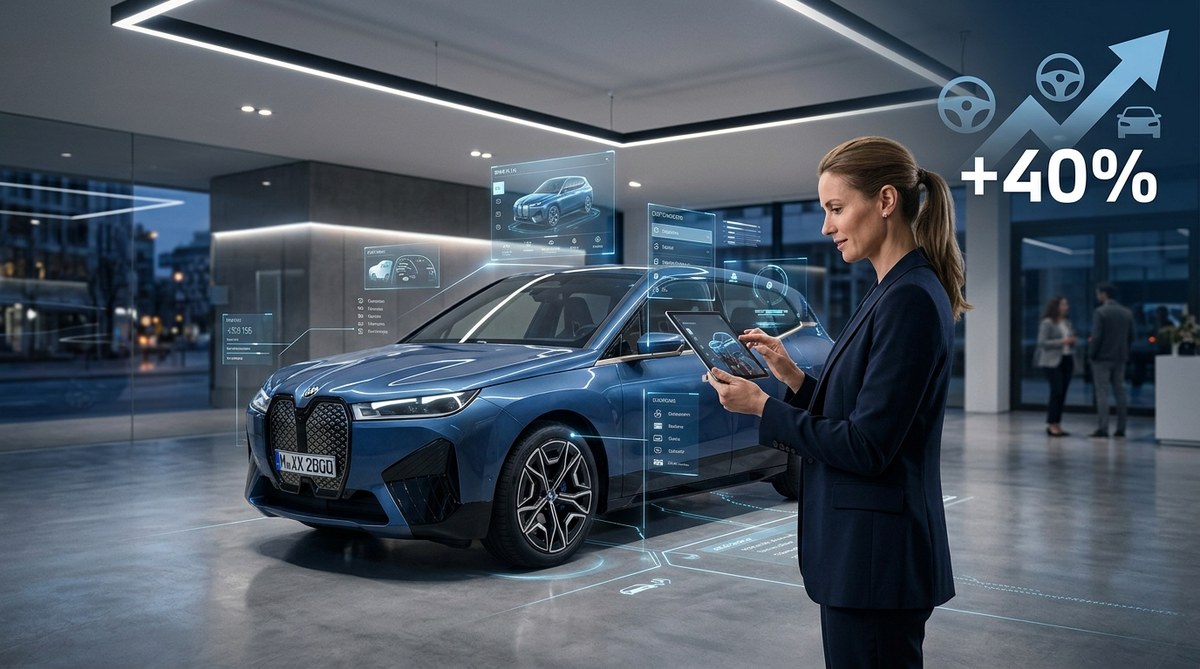
A new era in automotive retail is unfolding thanks to BMW’s innovative use of augmented reality technology. The BMW augmented reality showroom offers potential buyers a chance to virtually explore vehicles in a lifelike environment, all from their smartphones or tablets. This breakthrough not only enhances customer engagement but also significantly influences buying decisions. As more brands seek to blend digital and physical experiences, BMW’s approach illustrates the power of AR to redefine how consumers connect with cars before they ever step into a dealership.
BMW’s augmented reality showroom elevates customer experience by allowing virtual vehicle interaction, increasing test drive bookings by 40 percent, and setting a new standard for automotive marketing innovation.
How BMW’s augmented reality showroom is changing car shopping
The BMW augmented reality showroom is a prime example of how automotive brands can leverage cutting-edge technology to create immersive, interactive experiences. Instead of traditional showrooms limited by physical space, BMW’s AR platform enables customers to visualize, customize, and even virtually walk around different models right from their devices. This approach bridges the gap between online and offline retail, making the process more engaging and accessible.
What makes BMW’s AR showroom stand out
This AR experience offers several advantages. First, it allows users to see a vehicle in their own environment or a virtual showroom setting, providing a realistic sense of scale and detail. Second, customers can customize features like color, wheels, and interior options in real time. Finally, the AR interface is designed to be user-friendly, making it easy for beginners to navigate without prior technical knowledge.
The impact on customer engagement and sales
By integrating AR into their sales process, BMW has seen a noticeable rise in customer interaction. The ability to explore vehicles virtually reduces hesitations and increases confidence in purchasing decisions. According to BMW, this strategy led to a 40 percent increase in test drive bookings. This success demonstrates how accessible AR can serve as a powerful marketing tool, especially for brands aiming to stand out in a crowded marketplace.
Practical steps to create your own AR showroom experience
Building an augmented reality showroom similar to BMW’s involves several key steps. Here’s a simple process to get started:
-
Define your goals and target audience
Understand what you want to achieve and who your customers are. Are you aiming to boost sales, increase engagement, or educate buyers about features? Knowing your audience helps tailor the experience. -
Choose the right AR platform and tools
Select software that matches your technical skill level and project needs. For beginners, platforms like https://accessar.co/meta-spark-studio-vs-lens-studio-which-ar-platform-should-you-choose/ can simplify the creation process. -
Create detailed 3D models of your vehicles
High-quality 3D assets are crucial. You can either develop these in-house or partner with 3D artists. Ensure models are optimized for mobile devices to prevent slow load times. -
Design interactive features and customization options
Incorporate features that allow users to change colors, add accessories, or view different angles. Keep the interface intuitive to encourage exploration. -
Test and refine your AR experience
Gather feedback from users and make improvements. Check compatibility across devices and ensure smooth performance. -
Launch and promote your AR showroom
Integrate it into your website, social media, and email campaigns. Highlight the benefits and how easy it is to try virtually.
Tips for success
- Use clear visual cues and simple instructions to guide users.
- Keep models lightweight to ensure fast-loading experiences.
- Incorporate analytics to monitor user interactions and improve over time.
Techniques and common pitfalls in AR showroom development
| Techniques | Mistakes to Avoid |
|---|---|
| High-quality, optimized 3D models | Using unoptimized models that cause lag |
| Intuitive interface design | Overloading the experience with too many options |
| Consistent branding elements | Ignoring user feedback during testing |
| Clear call-to-action buttons | Making navigation confusing or complex |
| Cross-platform compatibility | Forgetting to test on different devices |
Expert advice: “Start small with a core set of features and expand based on user feedback. Focus on realism and ease of use to keep customers engaged.”
Scanning the AR creation process
- Start with goal setting
- Select beginner-friendly tools
- Develop lightweight 3D assets
- Build interactive features
- Test, refine, and promote
Showcasing inspiring AR campaigns in automotive retail
BMW’s AR showroom is not alone in transforming car sales. Many brands have adopted AR for virtual test drives, interactive showrooms, and branded experiences. For example, some automakers have integrated AR into their marketing campaigns to increase engagement during product launches or events. These campaigns often feature social sharing elements, encouraging users to showcase their virtual interactions and drive organic promotion.
Why AR campaigns succeed
- They foster emotional connections with the brand
- They reduce barriers to experiencing vehicles
- They generate buzz through social sharing
- They provide measurable engagement metrics
How to draw inspiration
Review case studies from leading brands and adapt ideas to fit your brand voice. Focus on creating memorable, user-centered experiences that align with your marketing goals.
Final thoughts: bringing innovation into your retail strategy
Implementing an augmented reality showroom similar to BMW’s is more accessible than ever. With the right tools and a clear plan, automotive brands of all sizes can offer immersive experiences that captivate customers. As AR technology continues to evolve, the potential for creative retail solutions grows. Start experimenting with simple AR features today and watch your engagement and sales grow.
Taking the next step in automotive retail
Adding an augmented reality showroom to your marketing mix can turn casual browsers into loyal customers. It creates a dynamic environment where buyers feel confident exploring your vehicles in detail, even from afar. Begin with basic AR features, gather user feedback, and gradually expand your offerings. The future of car sales is digital, and embracing AR today positions your brand at the forefront of innovation.