
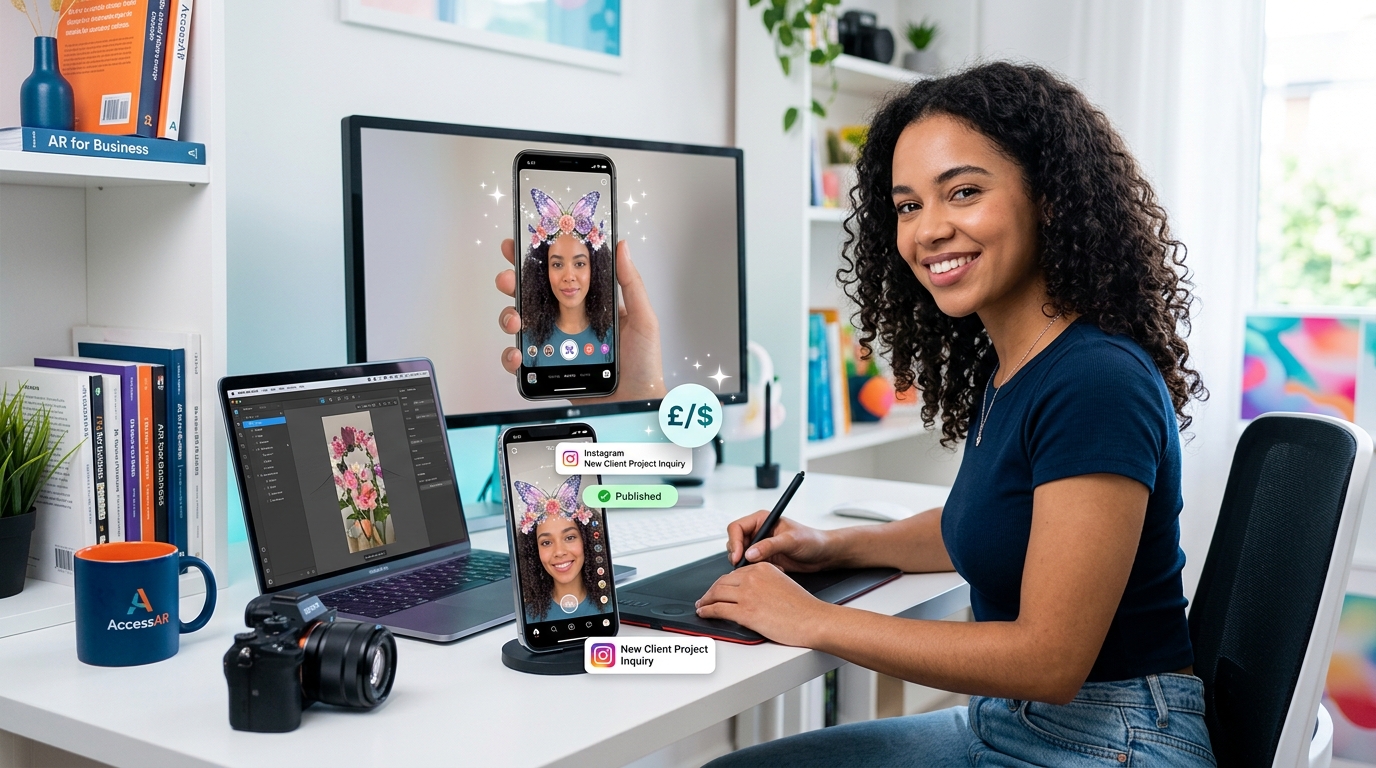
You’ve spent hours perfecting face tracking effects and building filters that people actually want to use. Now it’s time to turn those skills into real money. Instagram AR filters aren’t just a creative outlet anymore. They’re a legitimate business opportunity for designers who know how to position themselves in the market.
Instagram AR filter creators can monetize their skills through brand partnerships, client services, template sales, and educational content. Success requires building a strong portfolio, understanding client needs, pricing services appropriately, and marketing your expertise across multiple channels. Most creators earn between $500 and $5,000 per filter project, with experienced designers commanding premium rates for complex brand campaigns.
Understanding the AR Filter Market
The demand for custom Instagram filters has grown substantially over the past three years. Brands want unique effects that align with their campaigns. Small businesses need affordable AR solutions. Influencers want signature filters that strengthen their personal brand.
This creates multiple income streams for skilled creators.
The market breaks down into several client types. Fashion and beauty brands typically have larger budgets and need product visualization filters. Entertainment companies want promotional effects tied to movie releases or music launches. Local businesses often need simpler branded filters for events or seasonal campaigns.
Each client type requires a different approach to pricing and delivery.
Building Your Professional Portfolio
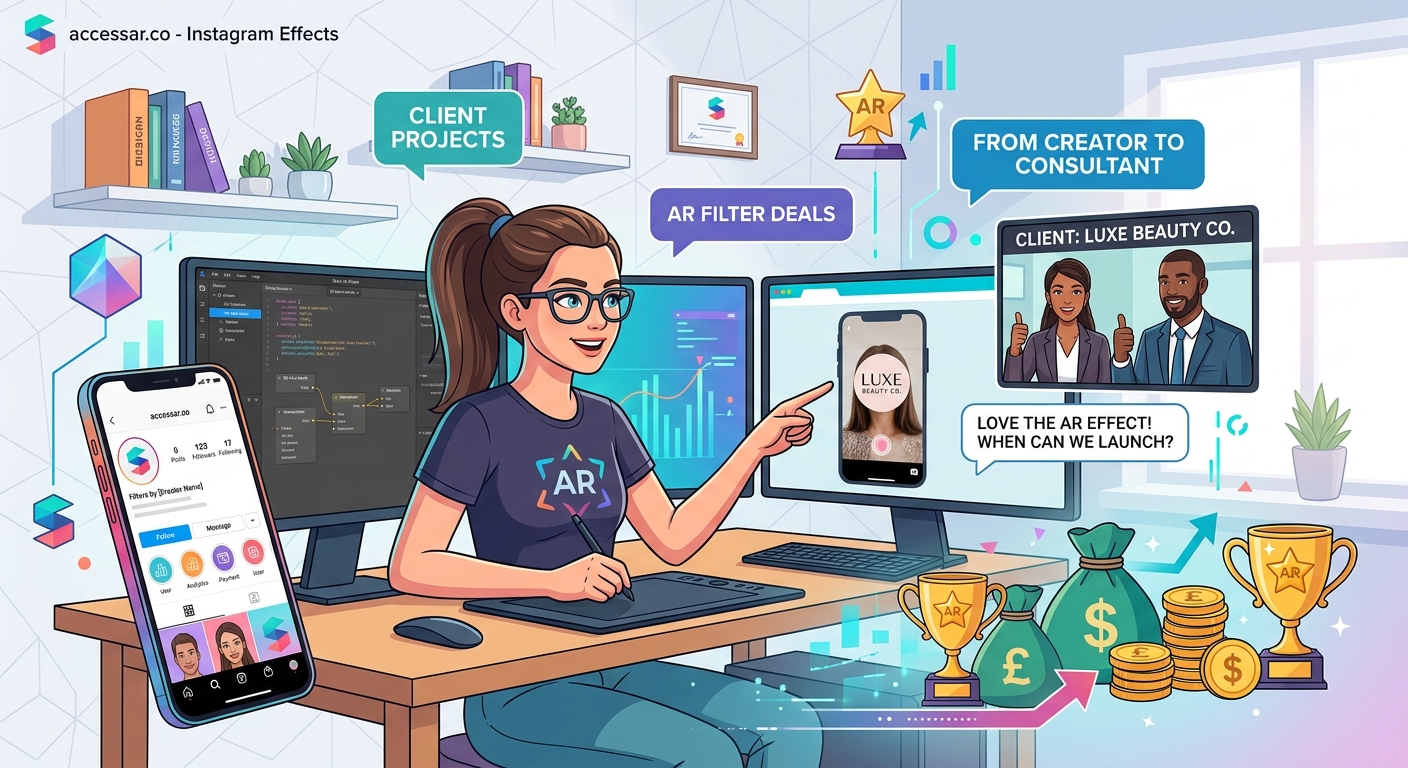
Your portfolio determines what clients will pay you. A collection of personal projects won’t cut it if you want premium rates. You need work that demonstrates business value and creative problem solving.
Start by creating 7 viral Instagram AR filter ideas you can build this weekend that showcase different technical skills. Include face tracking effects, world effects, interactive games, and product try-ons. Each filter should solve a specific use case that brands care about.
Document your process for each project. Show wireframes, explain technical challenges, and present usage metrics when available. Clients want to see how you think, not just what you can build.
Consider these portfolio essentials:
- At least three filters with 10,000+ impressions
- One product visualization or try-on effect
- One interactive game or engagement filter
- Case studies with measurable results
- Before and after comparisons for brand work
Finding Your First Paying Clients
Most creators start by offering services to their existing network. Reach out to local businesses, influencer friends, or brands you already follow. Your first few projects might pay less than you’d like, but they provide testimonials and case studies.
Cold outreach works when you personalize your pitch. Study a brand’s existing social media presence. Identify gaps in their content strategy. Propose a specific filter concept that addresses their needs.
Here’s a proven outreach sequence:
- Research the brand’s recent campaigns and audience demographics
- Create a mockup or concept sketch for a custom filter idea
- Send a personalized pitch explaining how the filter supports their goals
- Follow up after one week with additional examples or refinements
- Offer a discovery call to discuss their broader AR strategy
Freelance platforms like Upwork and Fiverr have AR filter categories, but competition is fierce and rates are often low. Use these platforms to build initial reviews, then transition clients to direct contracts.
Pricing Your AR Filter Services
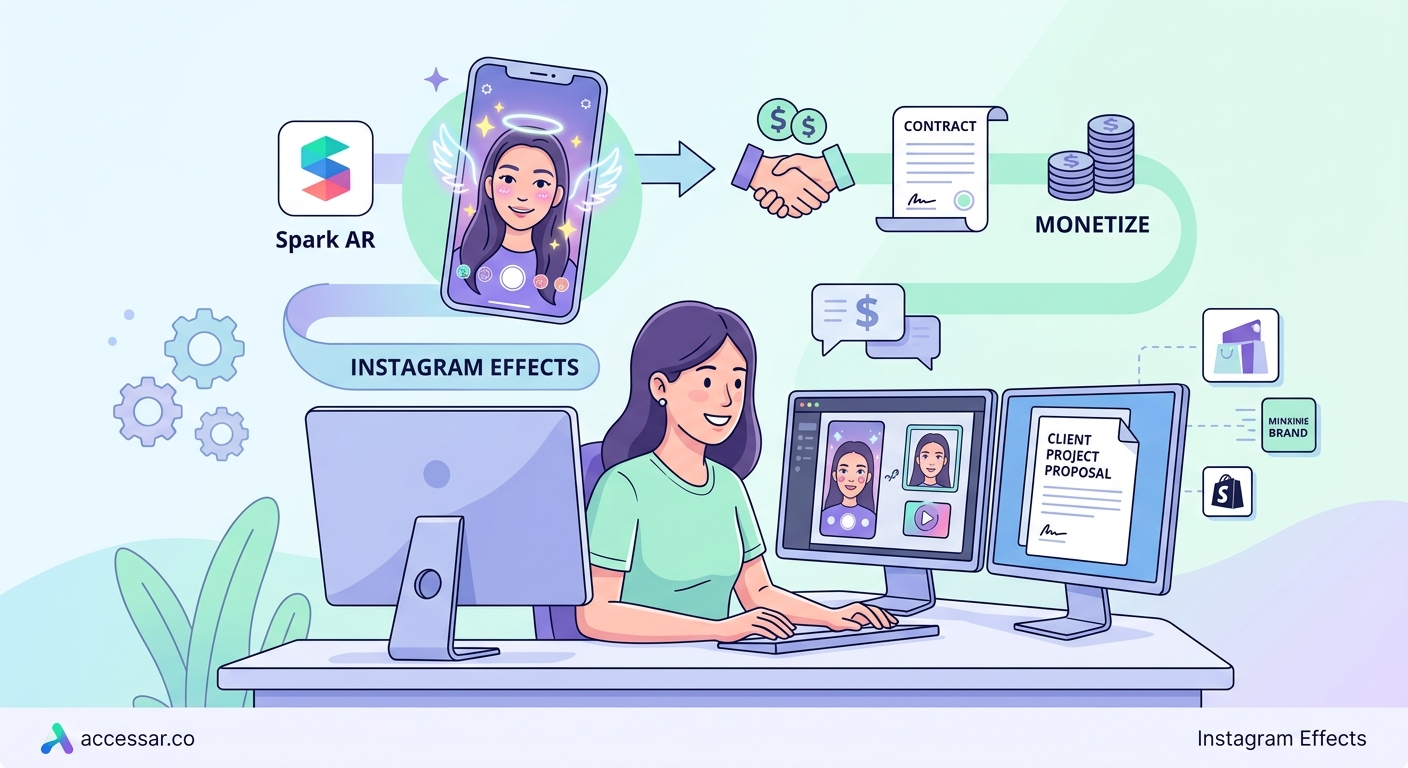
Pricing varies wildly based on complexity, client budget, and your experience level. New creators often charge $300 to $800 per filter. Intermediate designers command $1,000 to $3,000. Established professionals with proven results charge $5,000 or more for complex brand campaigns.
Don’t price based solely on hours worked. Factor in the business value you provide. A filter that generates 100,000 impressions for a product launch is worth more than a simple branded effect for a local event.
| Service Type | Beginner Rate | Intermediate Rate | Expert Rate |
|---|---|---|---|
| Simple branded filter | $300-$500 | $800-$1,200 | $2,000-$3,500 |
| Product try-on effect | $500-$800 | $1,500-$2,500 | $4,000-$7,000 |
| Interactive game filter | $600-$1,000 | $2,000-$3,500 | $5,000-$10,000 |
| Campaign package (3+ filters) | $1,200-$2,000 | $4,000-$7,000 | $12,000-$25,000 |
Consider offering tiered packages. A basic package includes one filter with two revision rounds. A premium package might include multiple filters, usage analytics reports, and promotion support.
Always require a deposit before starting work. Fifty percent upfront protects your time and filters out clients who aren’t serious.
Creating Passive Income Streams
Client work pays well but requires constant hustling. Passive income streams let you earn while you sleep. Several models work for AR creators.
Selling filter templates generates recurring revenue. Create polished, customizable effects that other creators can modify for their needs. Platforms like Gumroad or your own website work well for distribution. Price templates between $15 and $150 depending on complexity.
Educational content builds authority while generating income. Record tutorials showing your process. Launch a course teaching beginners how to publish your first Instagram filter and get it approved fast. Create a membership community where students get feedback on their work.
Affiliate partnerships with AR tool companies can supplement your income. If you recommend Meta Spark Studio vs Lens Studio platforms regularly, some companies offer referral commissions.
“The creators making consistent money aren’t just building filters. They’re building systems that work without them. Templates, courses, and productized services create leverage that hourly client work never will.” – Experienced AR creator
Marketing Your AR Services
Nobody will hire you if they don’t know you exist. Marketing feels uncomfortable for many creatives, but it’s non-negotiable for a sustainable business.
Social media presence is your primary marketing channel. Post your filters on Instagram and TikTok regularly. Show behind-the-scenes content. Share client results. Engage with other creators in the AR community.
Content marketing establishes expertise. Write case studies breaking down successful campaigns. Create comparison guides for different filter types. Share technical tutorials that showcase your knowledge.
Your marketing should address these common client questions:
- How long does filter development take?
- What information do you need to start a project?
- Can filters be updated after launch?
- How do you measure filter performance?
- What makes a filter go viral?
Email outreach to marketing agencies can generate consistent referrals. Agencies often need AR specialists for client campaigns but don’t have in-house talent. Position yourself as their go-to partner for filter projects.
Scaling Beyond Solo Projects
Once you’re consistently booking client work, you’ll hit a ceiling. There are only so many hours in your week. Scaling requires systems and potentially team members.
Productized services streamline your workflow. Instead of custom quoting every project, offer fixed-price packages with clear deliverables. A “Brand Filter Starter Pack” might include one custom filter, three revision rounds, and a usage guide for $2,500.
This approach speeds up sales conversations and sets clear expectations.
Hiring contractors or junior designers lets you take on more projects. You handle client communication and creative direction while they execute technical work. This model works best once you have consistent monthly revenue.
Retainer agreements with brands provide predictable income. Offer ongoing AR support where you create new filters monthly or quarterly. Retainers typically range from $3,000 to $15,000 per month depending on deliverables.
Avoiding Common Monetization Mistakes
New creators make predictable mistakes that limit their earning potential. Learning from others’ errors saves time and frustration.
Underpricing your work is the most common trap. You might think low rates will attract more clients, but it often signals low quality. Clients willing to pay premium rates are usually easier to work with and provide better testimonials.
Skipping contracts creates headaches. Always use a written agreement that specifies deliverables, revision limits, payment terms, and usage rights. Free contract templates exist online, or invest in a lawyer to create one specific to AR services.
| Mistake | Why It Hurts | Better Approach |
|---|---|---|
| No usage rights clause | Clients resell your work | Specify one-time use or charge for extended rights |
| Unlimited revisions | Projects never end | Include 2-3 revision rounds, charge for additional changes |
| Starting work without deposit | Risk of non-payment | Require 50% upfront payment |
| Ignoring project scope creep | Free work eats your profit | Document all changes and charge for scope additions |
Failing to track metrics limits your ability to prove value. Use Instagram Insights or third-party analytics tools to monitor filter performance. Present this data in client reports to justify your rates and win repeat business.
Expanding to Other Platforms
Instagram isn’t the only monetization opportunity. Snapchat and TikTok offer similar potential with different audiences and technical requirements.
Snapchat Lens Studio has a robust creator economy. Brands often want effects on multiple platforms, so learning how to make your first Snapchat lens in under 30 minutes expands your service offerings. Snapchat also runs official creator programs that pay for popular lenses.
TikTok Effect House is newer but growing fast. The platform skews younger, which appeals to brands targeting Gen Z. Understanding viral TikTok effect trends helps you pitch relevant concepts to clients.
Multi-platform packages command higher rates. A campaign that includes Instagram, Snapchat, and TikTok versions of the same effect might cost $8,000 to $15,000 instead of $3,000 for a single platform.
WebAR opens enterprise opportunities. Brands want AR experiences that work without app downloads. Learning why WebAR is the future of mobile shopping experiences positions you for higher-budget projects with e-commerce companies.
Building Long-Term Client Relationships
One-off projects are fine, but recurring clients provide stability. Turning single purchases into ongoing relationships requires intentional effort.
Deliver exceptional results on every project. Meet deadlines. Communicate proactively. Provide more value than promised. These basics sound obvious but many creators fail at them.
Stay in touch after project completion. Send a follow-up email one month later asking about filter performance. Share relevant industry news or campaign ideas. Offer a discount on their next project as a loyalty incentive.
Create reasons for clients to return. Suggest seasonal filter updates. Propose new effects tied to upcoming product launches. Position yourself as a strategic partner, not just a vendor.
Ask for referrals explicitly. After a successful project, request introductions to other brands or agencies they work with. Offer a referral bonus like 10% off their next project for each qualified lead they send.
Turning Your Skills Into Sustainable Income
The path from hobbyist to paid professional isn’t complicated, but it requires consistent action. Build a portfolio that demonstrates business value. Price your services based on the results you deliver, not just your time. Market yourself where your ideal clients spend attention.
Start with one monetization method and execute it well before adding others. If client services appeal to you, land your first three paying projects before worrying about templates or courses. If passive income sounds better, create your first template and get ten sales before building a second.
The creators earning full-time income from AR filters didn’t get there overnight. They shipped work consistently, learned from each project, and refined their approach based on real market feedback. Your skills are valuable. Now go prove it to the people willing to pay for them.