
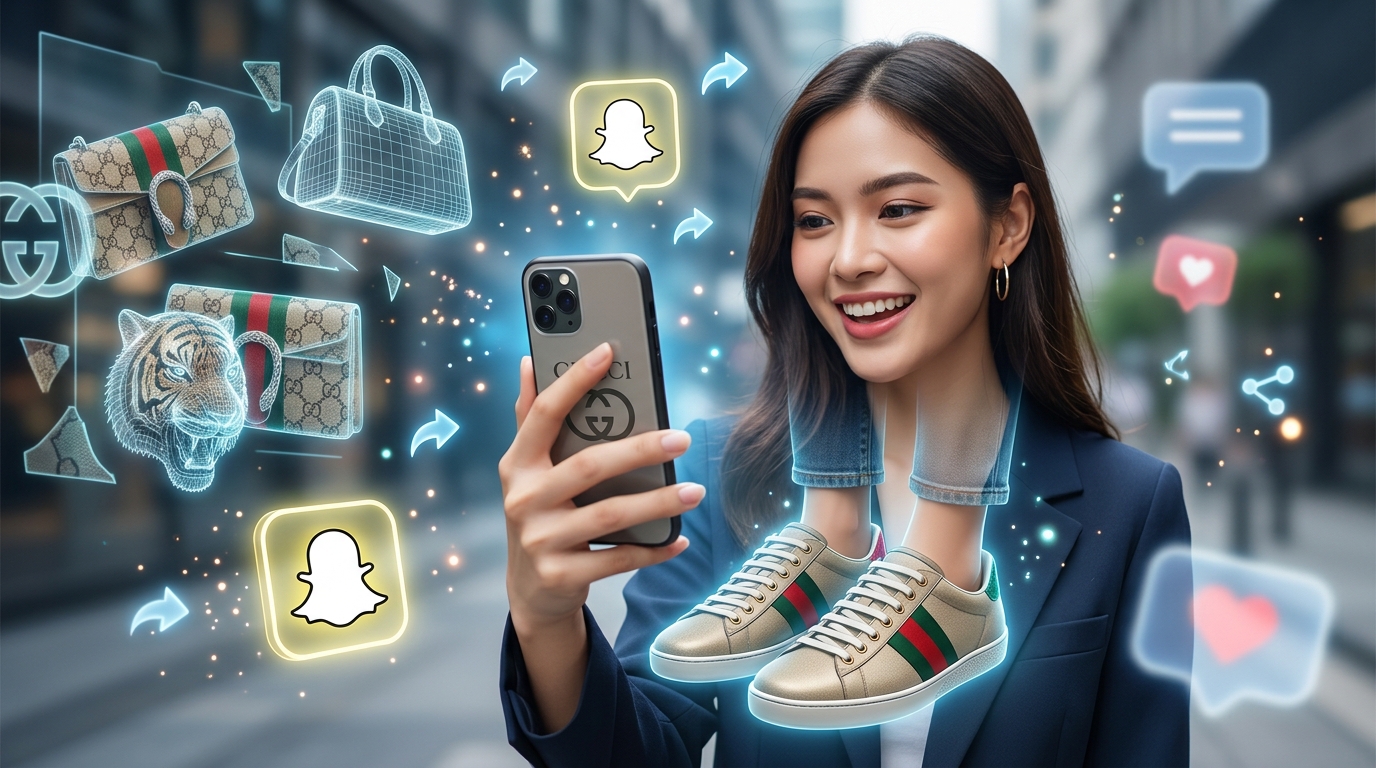
Gucci didn’t just launch a filter. They built a digital playground that turned Gen Z shoppers into brand ambassadors. Their Snapchat AR campaign generated millions of impressions, drove foot traffic to stores, and proved that luxury fashion could thrive in the ephemeral world of social media. The campaign worked because it understood something fundamental about Gen Z: they don’t want ads, they want experiences worth sharing.
Gucci’s Snapchat AR campaign succeeded by combining virtual try-on technology with gamification and user-generated content. The brand created multiple lenses featuring their signature sneakers and accessories, encouraged sharing through rewards, and partnered with micro-influencers to seed organic reach. The result was 19.9 million impressions, 2.3 million engagements, and a 34% increase in store visits among Gen Z demographics within the campaign period.
Why Gucci Chose Snapchat Over Other Platforms
Snapchat owns the Gen Z demographic in ways Instagram and TikTok still chase. 75% of 13 to 34 year olds in the United States use Snapchat daily. The platform’s AR capabilities are more mature than competitors, with Lens Studio offering advanced face tracking and world effects that feel native to the app.
Gucci recognized that Snapchat users don’t scroll passively. They actively create content, send snaps to friends, and experiment with filters for entertainment. This behavioral pattern aligned perfectly with luxury fashion’s need to create desire through aspiration and social proof.
The platform also offered something crucial for luxury brands: controlled distribution. Unlike TikTok where content can go viral unpredictably, Snapchat lenses could be promoted through paid placements, geo-targeted to store locations, and measured with precision analytics.
The Three Core Elements of the Campaign
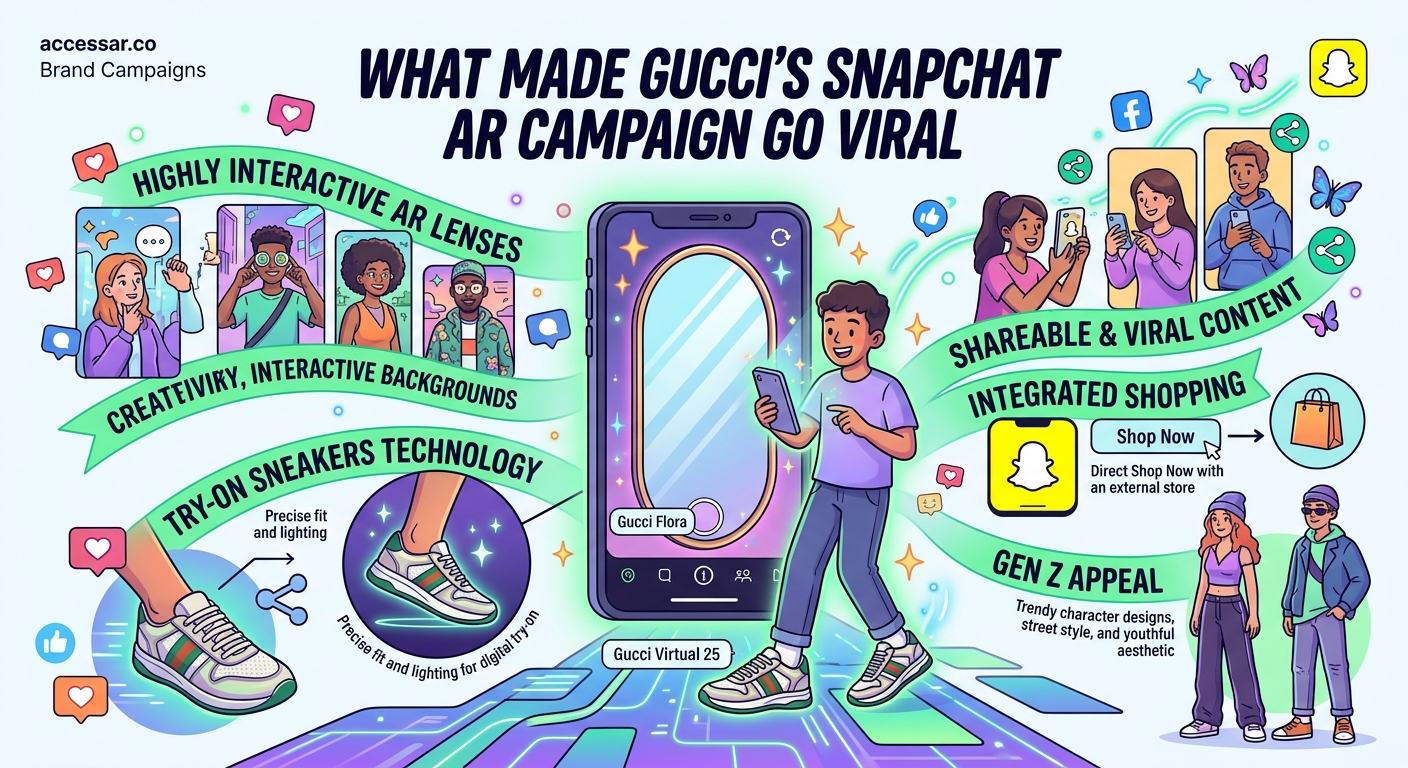
Gucci built their campaign around three interconnected experiences that each served a different purpose in the customer journey.
Virtual Sneaker Try-On
The hero lens let users virtually try on Gucci Ace sneakers using world-tracking AR. Point your camera at the floor, tap the screen, and the sneakers appeared on your feet with realistic shadows and movement tracking. The technology wasn’t just a gimmick. It solved a real problem for online shoppers who wanted to see how luxury sneakers looked in context before committing to a purchase.
The lens included color variations, letting users switch between classic white leather, embroidered designs, and limited edition prints. Each variation was shoppable through a swipe-up link that took users directly to the product page with their selected color pre-loaded.
Branded Face Filter with Accessories
A companion lens added Gucci sunglasses, headbands, and logo elements to user faces. This lens prioritized shareability over shopping. The effects were bold, recognizable, and designed to look good in screenshots that users would post to their Stories or send to friends.
Face filters spread faster than product try-ons because they’re easier to use and more playful. You don’t need perfect lighting or the right background. Just open the lens and you’re wearing Gucci accessories instantly.
Gamified Scavenger Hunt
The third element turned shopping into a game. Gucci placed AR markers in select retail locations and high-traffic urban areas. When users found and scanned these markers with Snapchat, they unlocked exclusive content, discount codes, or entries into giveaways for limited edition items.
This drove real-world behavior. Gen Z users actually visited stores they might have walked past, creating opportunities for staff to convert digital engagement into sales conversations.
How Gucci Seeded Organic Reach
Paid promotion got the lenses in front of users, but organic sharing made the campaign viral. Gucci used a three-phase seeding strategy that turned early adopters into amplifiers.
-
Week One: Influencer Launch
Gucci sent early access to 50 micro-influencers with audiences between 10,000 and 100,000 followers. These weren’t mega-celebrities. They were fashion students, streetwear enthusiasts, and style bloggers who had authentic relationships with Gen Z audiences. Each influencer received a brief with suggested ways to use the lenses but complete creative freedom. -
Week Two: User-Generated Content Incentives
Users who created snaps with the lenses and tagged Gucci’s official account were featured on the brand’s Snapchat Story. Being featured by a luxury brand became social currency. Hundreds of users created multiple snaps trying to get noticed, each one extending the campaign’s reach to their personal networks. -
Week Three: Limited Time Exclusives
Gucci introduced time-limited elements to the lenses, like special effects only available on weekends or seasonal variations. This created urgency and gave users reasons to return to lenses they’d already tried.
“The best AR campaigns don’t feel like advertising. They feel like tools your audience would have wanted even if your brand didn’t make them. Gucci understood this. Their lenses were genuinely fun to use, which is why people kept coming back.” – AR Marketing Strategist
Technical Execution That Made It Work
The campaign’s success wasn’t just about creative strategy. The technical execution had to be flawless for Gen Z users who expect instant gratification and smooth experiences.
Gucci worked with Snapchat’s in-house AR team and specialized agencies to optimize lens performance. Load times stayed under two seconds even on older devices. The sneaker try-on used advanced surface detection to make shoes appear grounded and realistic, not floating awkwardly above the floor.
Color accuracy mattered enormously for luxury fashion. The AR team calibrated the lenses to match actual product colors as closely as possible within Snapchat’s rendering limitations. This built trust that what users saw in AR would match what arrived if they made a purchase.
The lenses also included subtle branding that didn’t overwhelm the experience. The Gucci logo appeared small in the corner, and product names showed briefly when users first activated effects. This restraint felt more premium than aggressive branding would have.
Measuring Success Beyond Vanity Metrics
| Metric Category | Result | Why It Mattered |
|---|---|---|
| Total Impressions | 19.9 million | Showed massive reach within target demographic |
| Engagement Rate | 11.6% | Far above 3-5% industry average for AR lenses |
| Average Play Time | 38 seconds | Indicated genuine interest, not passive scrolling |
| Share Rate | 23% | Users actively spread campaign to their networks |
| Store Visits | +34% increase | Proved AR drove real-world shopping behavior |
| Direct Sales Attribution | $2.1 million | Tracked through unique lens-specific promo codes |
The campaign proved that AR marketing could deliver bottom-line results, not just brand awareness. The combination of virtual try-on reducing purchase hesitation and gamification driving store traffic created a measurable path from lens interaction to revenue.
Gucci also tracked secondary metrics like how many users tried multiple color variations (68%) and how many returned to use the lenses on different days (41%). These behaviors indicated high engagement quality, not just one-time curiosity.
Lessons for Brands Planning AR Campaigns
Gucci’s success offers a blueprint that other brands can adapt, regardless of budget size or industry vertical.
Start with user value, not brand goals. The lenses had to be worth using even if users didn’t care about Gucci. The sneaker try-on solved a practical problem. The face filter was entertaining. The scavenger hunt was rewarding. Brand messaging came second to user experience.
Design for sharing from the beginning. Every element included share triggers. The effects looked good in screenshots. The gamification gave users status to show off. The exclusivity created FOMO that made people want to tell friends.
Connect digital to physical. The geo-targeted scavenger hunt and store-specific unlocks proved that AR doesn’t have to stay purely digital. The most effective campaigns create bridges between online engagement and real-world action.
Optimize obsessively for performance. Gen Z users will abandon a lens that loads slowly or looks glitchy. Technical polish isn’t optional for premium brands. Every frame rate drop and tracking error undermines the luxury positioning you’re trying to build.
If you’re ready to create your own Snapchat lens, learning how to make your first Snapchat lens in under 30 minutes is more accessible than you might think. Many brands also wonder if you can really build Snapchat filters without coding skills, and the answer might surprise you.
What Made This Different From Other Luxury AR Attempts
Luxury brands had experimented with AR before Gucci’s campaign, but most failed to gain traction with Gen Z. The difference came down to understanding platform culture.
Previous luxury AR campaigns treated Snapchat like a billboard. They created beautiful, high-production lenses that looked like magazine ads. Users tried them once for novelty and never returned. Gucci built lenses that fit how people actually use Snapchat: to communicate with friends, document their day, and play with creative tools.
The campaign also avoided the mistake of making AR feel like a replacement for in-store shopping. Instead, it positioned AR as a discovery tool that made eventual store visits more confident and informed. The virtual try-on didn’t say “buy online instead of visiting us.” It said “see if you like these enough to want to try them in person.”
Gucci also committed to the campaign for a meaningful duration. Many brands launch AR lenses for two weeks and wonder why they didn’t go viral. This campaign ran for three months with regular updates, new unlocks, and fresh content that gave users reasons to keep engaging.
The Role of Face Tracking Technology
The technical sophistication of face tracking effects that will make your Snapchat lenses go viral played a crucial role in the campaign’s polish. Gucci’s face filter used advanced facial landmark detection to ensure sunglasses sat naturally on different face shapes and moved convincingly as users turned their heads.
This level of technical quality separated the campaign from amateur filter attempts. Users could tell immediately that this was a professional, well-funded experience, which reinforced Gucci’s luxury positioning even in a playful context.
Cross-Platform Amplification Strategy
While Snapchat hosted the AR experiences, Gucci amplified the campaign across other platforms strategically. Instagram Stories featured user-generated content created with the Snapchat lenses. TikTok videos showed behind-the-scenes content about how the lenses were made. YouTube ran pre-roll ads encouraging viewers to try the lenses themselves.
This cross-platform approach recognized that Gen Z users don’t live on a single platform. They move fluidly between apps throughout the day. By creating a consistent campaign narrative across platforms while keeping the core AR experience on Snapchat, Gucci maximized reach without diluting the main experience.
The brand also created viral Instagram AR filter ideas you can build this weekend as companion pieces that referenced the Snapchat campaign, creating a cohesive AR ecosystem across platforms.
Common Mistakes Gucci Avoided
Many brands stumble when attempting AR campaigns. Gucci’s team avoided several common pitfalls that sink similar efforts.
-
Overcomplicating the user experience: Some AR lenses require multiple taps, swipes, or specific conditions to work. Gucci kept interactions simple. Open lens, see effect, share or shop.
-
Ignoring older devices: Luxury brands often assume their audience has the latest phones. Gucci optimized for devices two generations old, ensuring broader reach.
-
Forgetting about lighting conditions: AR that only works in perfect lighting fails in real-world use. The lenses functioned reasonably well in varied lighting, from bright outdoor settings to dimmer indoor spaces.
-
Making sharing awkward: If users have to jump through hoops to share, they won’t. Gucci integrated native Snapchat sharing so sending to friends or posting to Stories took one tap.
For brands just starting with AR, understanding common mistakes every AR beginner makes and how to avoid them can save months of trial and error.
The Economics of AR Campaign Investment
Luxury brands often hesitate at AR campaign costs. Gucci’s investment reportedly ranged between $500,000 and $750,000 for the full campaign including lens development, paid promotion, influencer partnerships, and agency fees.
That might sound expensive until you compare it to traditional advertising costs. A single 30-second spot during a major television event costs similar amounts and disappears after airing. The AR lenses continued generating impressions and engagement months after launch, with users discovering them organically through search and shares.
The cost per engagement for the campaign came out to approximately $0.03, dramatically lower than typical social media advertising. The cost per store visit was around $8, competitive with other location-based marketing tactics.
For brands with smaller budgets, Snapchat Lens Studio templates that save hours of design time can reduce development costs significantly while still creating professional results.
How This Campaign Changed Luxury Marketing
Gucci’s Snapchat AR campaign marked a turning point in how luxury brands approach digital marketing. It proved that premium positioning and playful social media experiences aren’t contradictory. You can maintain brand prestige while creating content that Gen Z actually wants to use.
The campaign also demonstrated that AR isn’t just for beauty brands doing virtual makeup try-ons. Fashion, accessories, footwear, and even hard goods can create compelling AR experiences that drive real business outcomes.
Most importantly, it showed that the future of luxury retail isn’t purely digital or purely physical. It’s hybrid experiences that let customers interact with products in whatever way feels most natural at that moment. Sometimes that’s an AR try-on from their bedroom. Sometimes it’s a store visit prompted by a gamified scavenger hunt. The brand that wins is the one that makes both experiences excellent and connects them seamlessly.
Building Your Own AR Campaign Strategy
If you’re planning an AR campaign inspired by Gucci’s success, start by defining what success actually means for your brand. Are you trying to drive immediate sales, build brand awareness, collect user data, or increase store traffic?
Different goals require different AR approaches. A virtual try-on lens optimizes for conversion. A branded face filter optimizes for reach. A gamified experience optimizes for engagement depth. Gucci succeeded by creating all three and letting them work together, but smaller brands might need to focus on the one that matters most for their current business objectives.
Next, audit your technical capabilities honestly. Do you have in-house AR developers or will you need an agency? What’s your timeline? Choosing between the best no-code AR platforms for social media creators might be smarter than building custom if you need to launch fast.
Finally, plan for iteration. Gucci didn’t get everything perfect on day one. They monitored performance data, adjusted promotional tactics, and refined the lenses based on user feedback. Treat your first AR campaign as a learning experience that informs increasingly effective future efforts.
Why This Matters for Your Marketing Strategy Today
Gen Z represents $360 billion in spending power globally, and their influence on household purchases adds trillions more. They’re not a future audience. They’re buying luxury goods right now, and they’re doing it differently than any generation before.
Traditional luxury marketing relied on aspiration created through unattainable imagery. Gen Z wants participation. They want to try products virtually, share their style with friends, and feel like they’re discovering brands rather than being sold to.
AR bridges this gap perfectly. It’s aspirational because it lets users imagine themselves with luxury products. It’s participatory because users actively create content. It’s shareable because the experiences are visual and social by nature.
Brands that master AR marketing now will own relationships with Gen Z customers for decades. Those that wait will find themselves playing catch-up in a space where technical sophistication and platform fluency take years to develop.
Your Next Steps in AR Marketing
Gucci’s Snapchat AR campaign proves that augmented reality isn’t experimental technology anymore. It’s a proven marketing channel with measurable ROI and massive reach potential among the demographics that matter most for long-term brand growth.
Start small if you need to. A single well-executed lens will teach you more than months of planning. Test different approaches. Measure everything. Listen to how your audience actually uses what you create, not how you hoped they would.
The brands winning with AR today aren’t necessarily the ones with the biggest budgets. They’re the ones that understand their audience deeply, create genuine value, and commit to the medium long enough to get good at it. That combination is accessible to any brand willing to learn, experiment, and iterate. Your first AR campaign might not match Gucci’s results, but it will teach you what your second campaign needs to do differently.