
TikTok creators who master trending effects get millions of views while others struggle to break 1,000. The difference isn’t talent or expensive equipment. It’s knowing which Effect House trends are taking off right now and how to build them before everyone else does.
TikTok Effect House trends in 2024 focus on AI-powered transformations, interactive games, face morphing, and reality-bending visuals. Creators who build these effects early gain massive reach. This guide covers the seven hottest trend categories, technical requirements, common mistakes to avoid, and proven strategies to make your effects go viral on the platform.
Why Effect House trends change so fast
TikTok’s algorithm favors novelty.
When a new effect drops, the platform pushes it hard. Users see it, try it, and the effect spreads. But this window lasts maybe two weeks before saturation hits.
Effect creators who spot patterns early win. They build similar effects with their own twist before the trend peaks. Late arrivals get buried.
The platform releases new Effect House features monthly. Each update enables fresh creative possibilities. Creators who learn these tools first dominate the trend cycle.
Understanding what makes an effect trend helps you predict the next wave. Most viral effects share three traits: they’re easy to use, visually surprising, and work for multiple content types.
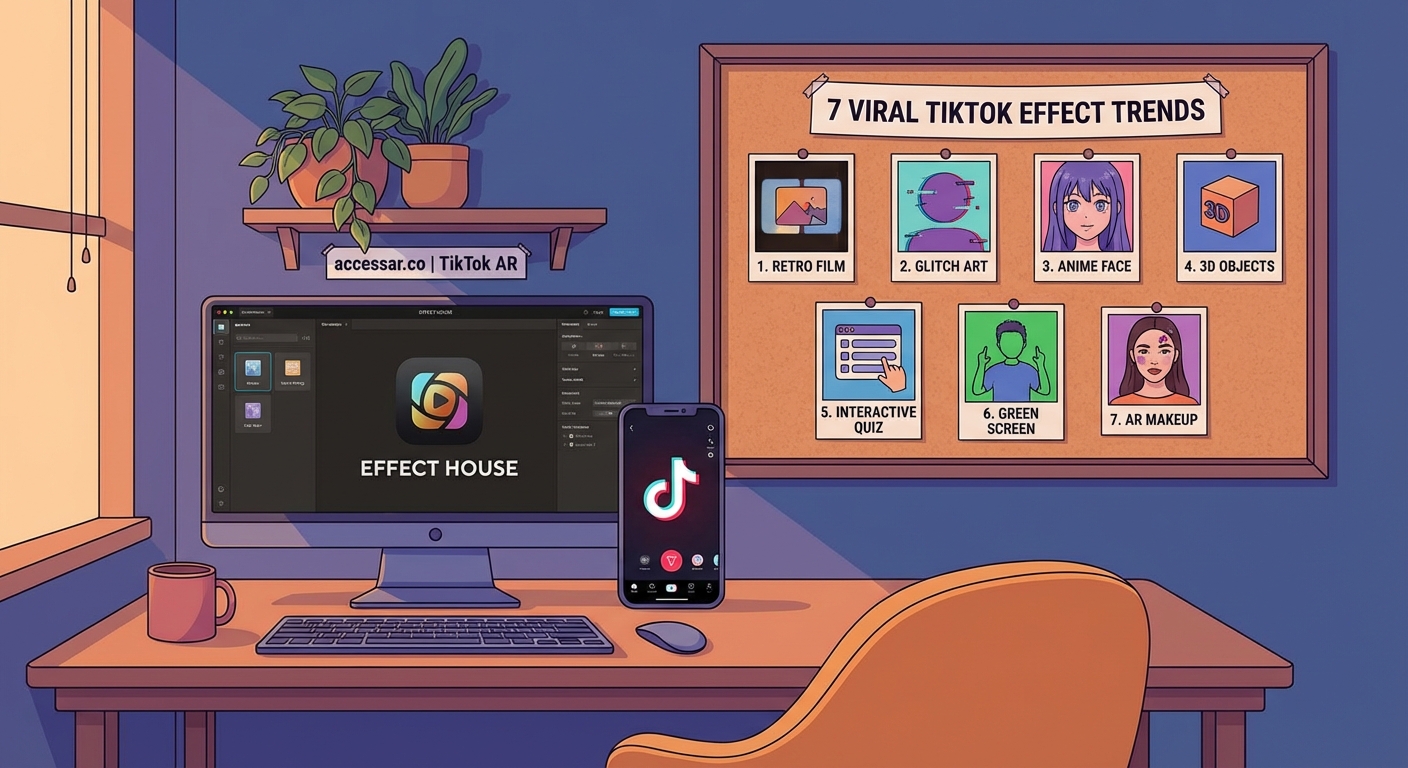
The seven trend categories dominating Effect House right now
Current TikTok Effect House trends fall into clear patterns. Knowing these categories helps you choose what to build.
AI transformation effects lead the pack. These use machine learning to change faces, voices, or entire scenes. The “AI yearbook” trend pulled 50 million videos. Users uploaded selfies and got 90s-style school photos back.
Interactive game effects turn your face into a controller. Blink to jump, open your mouth to catch falling objects, or tilt your head to steer. These effects keep users engaged longer, which the algorithm loves.
Face morphing transitions blend two people’s faces or age you up and down. The “which parent do you look like” effect got 2 billion views because it works for everyone.
Reality-bending backgrounds replace or warp your environment. Green screen effects are old news. New trends use depth mapping to make backgrounds respond to your movements.
Beauty enhancement filters never die, but they evolve. Current trends focus on subtle, natural looks rather than extreme changes. Think “clean girl aesthetic” not “Instagram face.”
Text and data overlays display information about the user. Birth chart effects, personality tests, and “vibe check” filters perform well because they’re shareable and conversation starters.
Sound-reactive visuals sync animations to music beats. These work perfectly with TikTok’s audio-first culture. Effects that make you look like you’re in a music video consistently trend.
Technical requirements you need to know
Effect House runs on Windows 10+ or macOS 10.15+. You’ll need at least 8GB RAM, but 16GB makes everything smoother.
Download the software from TikTok’s official Effect House site. It’s free. No subscription fees or hidden costs.
The interface looks intimidating at first. It’s similar to Unity or Unreal Engine if you’ve used those. If not, expect a learning curve.
You don’t need coding skills for basic effects. The visual scripting system lets you drag and drop logic blocks. Advanced effects benefit from JavaScript knowledge but it’s not required.
Most trending effects use these core features:
- Face tracking (68-point mesh)
- Hand tracking
- Body tracking
- Segmentation (separating person from background)
- 3D objects and animations
- Particle systems
- Audio analyzers
Effect file size matters. TikTok limits effects to 10MB. Compress textures and optimize 3D models or users won’t download your effect.
Building your first trending effect in five steps
Start simple. Don’t attempt the most complex effect you’ve seen.
-
Pick one trend category from the seven above. Choose based on your skills, not just popularity. If you’re good with 3D modeling, try reality-bending backgrounds. If you understand timing, build a sound-reactive effect.
-
Study three successful examples in that category. Use them yourself. Note what makes them satisfying. Is it the surprise reveal? The smooth animation? The way it flatters users?
-
Sketch your variation on paper first. What’s your unique angle? Maybe you’re doing an AI transformation but with a specific aesthetic. Or an interactive game with a seasonal theme.
-
Build the minimum version in Effect House. Get the core mechanic working. Don’t worry about polish yet. Test it on yourself. Does it work? Is it fun?
-
Refine based on testing. Show it to friends. Watch where they get confused. Fix those friction points. Add visual feedback so users know what to do.
Most creators skip step two. They build what they think is cool without researching what actually performs. Don’t make that mistake.
Common mistakes that kill effect performance
| Mistake | Why It Fails | Better Approach |
|---|---|---|
| Too many instructions | Users quit before trying | One simple action maximum |
| Slow loading time | Effect never starts | Optimize assets under 5MB |
| Requires perfect lighting | Only works in ideal conditions | Test in dim rooms and bright sun |
| Works on one face shape | Excludes most users | Test on diverse faces |
| No clear payoff | Users don’t know what happened | Big visual change or surprise |
| Copying exactly | TikTok buries duplicates | Add your unique element |
The biggest killer is complexity. You might think more features make a better effect. Wrong.
The “bold glamour” filter went viral because it did one thing perfectly. It smoothed skin and enhanced features so naturally that people couldn’t tell it was on. Simple premise, flawless execution.
Compare that to effects with five different modes, hand gestures, and voice commands. Nobody figures them out.
“The effects that blow up are the ones my grandma could use without instructions. If you need a tutorial video, you’ve already lost.” — Creator with 12 million effect uses
How to make your effect discoverable
Building a great effect is half the battle. Getting people to use it is the other half.
Timing matters more than quality. A good effect released during a trending moment beats a perfect effect released two weeks late. Monitor TikTok daily. When you see similar effects gaining traction, build fast.
Your effect name and icon are marketing. Use clear, searchable names. “Cartoon Face Filter” beats “Magic Transformation 2.0” every time. Your icon should show the effect’s result, not abstract graphics.
Submit to Effect House challenges. TikTok runs monthly competitions with prizes and promotion. Even if you don’t win, challenge entries get featured in the app.
Create a demo video that shows the effect in action. Post it with relevant hashtags. Tag the official Effect House account. Other creators will try your effect if they see it working.
Collaborate with creators who have audiences. Send them your effect before public release. If they use it, their followers will too.
The TikTok algorithm tests new effects on small audiences first. If engagement is high, it expands reach. If people skip past or don’t complete videos using your effect, it dies there.
Make sure your effect encourages completion. Users should want to watch the full video to see the transformation or result.
Advanced techniques separating viral effects from the rest
Once you’ve built a few basic effects, these techniques level up your work.
Randomization keeps effects fresh. Instead of the same result every time, add variables. Different colors, patterns, or outcomes make users try the effect multiple times.
Progression creates anticipation. Effects that build over 3-5 seconds perform better than instant transformations. The wait creates tension and keeps viewers watching.
Comparison formats boost shares. “Before and after” or “you vs. your friend” effects get shared more because they create social moments.
Seasonal timing multiplies reach. Build effects for upcoming holidays or events. A Valentine’s Day effect released February 1st will outperform the same concept in July.
Audio integration matters. Effects that work with specific trending sounds or music styles ride two trends at once.
Study the Effect House leaderboard weekly. It shows which effects are getting the most uses. Look for patterns in what’s working.
Notice how top effects use similar visual styles. Right now, that’s clean interfaces, smooth animations, and pastel or high-contrast color schemes. When that shifts, shift with it.
The publication and promotion process
You’ve built your effect. Now what?
Test it thoroughly first. Try it in different lighting. Test on friends with different face shapes and skin tones. Use it with various outfits and backgrounds.
Fix any bugs. A glitchy effect won’t get a second chance.
When you’re ready, click “Publish” in Effect House. You’ll fill out a submission form with your effect name, description, and category tags.
TikTok reviews submissions within a few days. They check for policy violations, technical issues, and quality standards. Most effects get approved unless they’re broken or inappropriate.
Once approved, your effect goes live. Now promote it.
Post at least three videos using your effect. Show different use cases. Make each video entertaining on its own, not just an effect demo.
Engage with anyone who uses your effect. Comment on their videos. This signals to the algorithm that there’s activity around your effect.
Join Effect House creator communities on Discord and Reddit. Share your work. Get feedback. Learn from others.
Track your effect’s performance in the Effect House analytics dashboard. You’ll see total uses, video views, and geographic data. If growth stalls, iterate. Release version 2.0 with improvements.
Monetization and growth opportunities
Effect creation isn’t just for fun. It’s a real growth channel.
Brands hire effect creators for custom filters. A single branded effect can pay $2,000 to $10,000 depending on complexity and your portfolio.
The TikTok Creator Fund includes effect creators now. If your effects generate enough views, you earn money directly from TikTok.
Some creators build effects to grow their personal brands. A viral effect brings profile visits. Those convert to followers if your content is good.
Effect creation also builds valuable skills. You learn 3D modeling, animation, visual scripting, and user experience design. These transfer to game development, AR/VR, and creative tech roles.
The Effect House creator program offers resources and sometimes features top creators. Getting featured can mean millions of uses overnight.
Staying ahead as trends shift
TikTok Effect House trends will look different in six months. The creators who succeed long-term adapt constantly.
Set aside time each week to browse new effects. Try them. Analyze what works. Note emerging patterns.
Follow Effect House’s official updates. They announce new features and tools monthly. Be among the first to experiment with them.
Build a library of reusable components. When you create a good particle system or animation, save it. You can remix these into new effects faster.
Don’t chase every trend. Focus on categories you enjoy and do well. Become known for a specific style.
Remember that effect creation is iterative. Your first ten effects probably won’t go viral. That’s normal. Each one teaches you something.
The creators with millions of effect uses didn’t get there with one hit. They published 20, 30, or 50 effects. A few broke through. Those few changed everything.
Your next move starts today
You now know which TikTok Effect House trends are working, how to build them, and what separates viral effects from forgotten ones.
The best time to start was three months ago when these trends emerged. The second best time is right now, before the next wave of creators floods the space.
Download Effect House today. Spend an hour in the tutorials. Build something simple this weekend. It won’t be perfect. That’s fine.
Your second effect will be better than your first. Your tenth will be better than your second. By your twentieth, you’ll have developed instincts for what works.
The creators dominating TikTok effects right now were exactly where you are 12 months ago. They just started building.