
Small brands are beating Fortune 500 companies at their own game. They’re using TikTok AR effects to reach millions without spending millions. You don’t need a massive ad budget or a team of developers to create branded filters that people actually want to use. You just need to understand how the platform works and what makes users tap that camera icon.
TikTok AR effects for brands deliver measurable results at a fraction of traditional advertising costs. Independent companies create viral campaigns using Effect House, TikTok’s free creation tool. Successful effects combine brand identity with user participation, generating organic reach through shares and remixes. Small budgets win when brands focus on creativity over production value and build effects that users genuinely want to share.
Why TikTok AR effects level the playing field
Traditional advertising favors companies with deep pockets. Television spots, billboard campaigns, and influencer partnerships all require significant investment. TikTok AR effects work differently.
The platform gives every brand access to the same creation tools. A startup can build an effect that reaches just as many users as a multinational corporation. The difference comes down to execution, not budget.
Users share effects they find entertaining or useful. They don’t care if the brand behind it spent $100,000 or $0 on production. They care about the experience.
This creates an opportunity for brands willing to think like content creators instead of advertisers.
What makes a branded AR effect successful
Successful effects solve a specific problem or fulfill a clear desire. They don’t just slap a logo on a face filter and hope for the best.
Consider what users want from their TikTok experience:
- Tools to make better content
- Ways to participate in trends
- Filters that make them look good
- Interactive elements that surprise friends
- Branded experiences that feel authentic
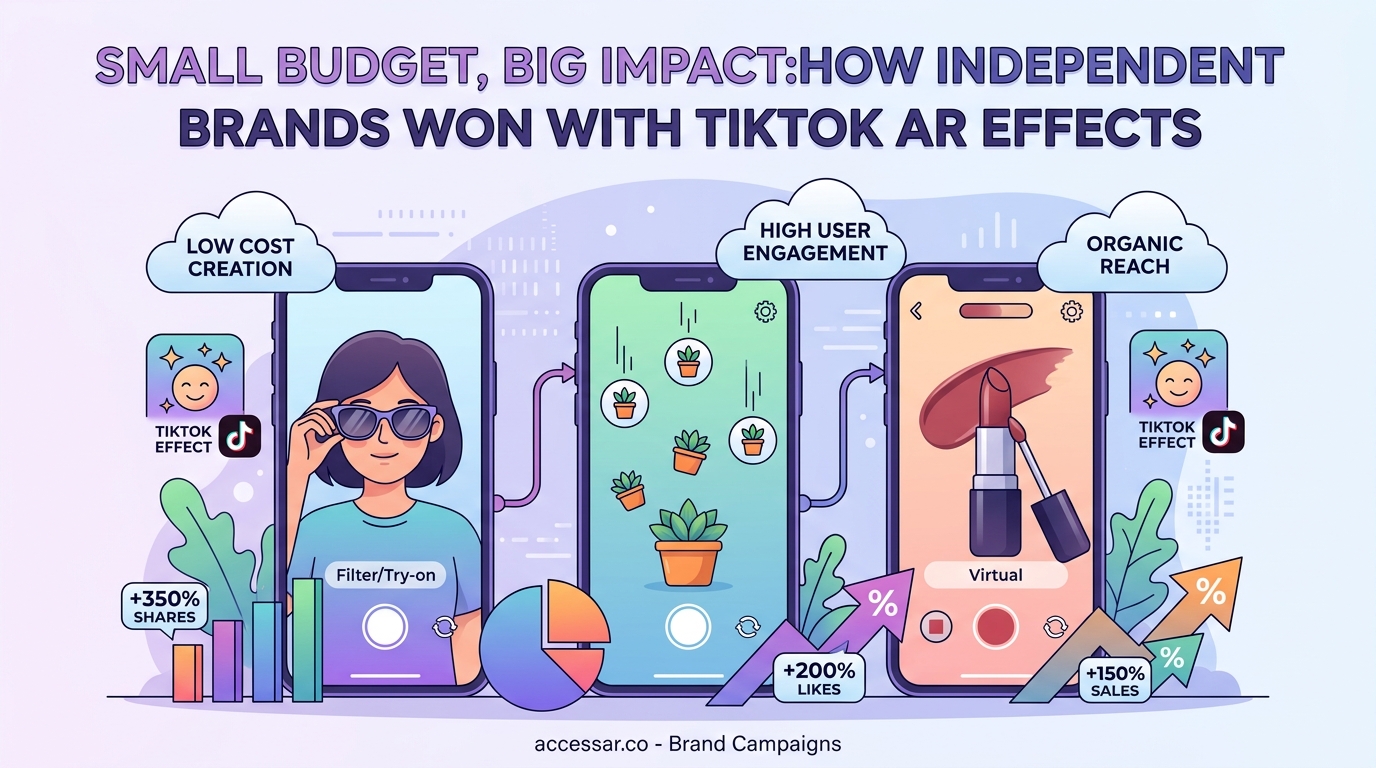
The best branded effects give users something they can’t get elsewhere. A makeup brand might create a color-matching filter that helps users find their perfect shade. A furniture company could build a room visualization tool. A snack brand might design a game that challenges users to catch falling products.
Each of these examples puts user value first and brand messaging second.
Building your first effect without coding experience
Effect House, TikTok’s creation platform, works without requiring programming knowledge. The interface uses visual scripting and pre-built templates.
Here’s how to start:
- Download Effect House from TikTok’s developer site
- Choose a template that matches your campaign goal
- Replace placeholder assets with your brand elements
- Test the effect using the built-in preview
- Submit for review through the Effect House dashboard
- Promote the approved effect through your TikTok account
Most brands complete their first effect within a week. The approval process typically takes 3 to 5 business days.
Templates handle the technical complexity. You focus on design and user experience. The complete beginner’s roadmap to publishing your first TikTok effect walks through each step in detail.
Real costs behind successful campaigns
Budget transparency matters. Here’s what independent brands actually spend on TikTok AR campaigns:
| Budget Item | Typical Cost | What It Covers |
|---|---|---|
| Effect House software | $0 | Complete creation platform |
| Design assets | $0 to $500 | Custom graphics, 3D models, animations |
| Testing devices | $0 to $200 | Optional additional phones for testing |
| Promotion budget | $100 to $2,000 | Paid ads to seed initial usage |
| Creator partnerships | $200 to $5,000 | Collaborations with micro-influencers |
Total campaign costs range from $300 to $7,700 for most small brands. Compare that to traditional social media advertising, where $5,000 might buy a few thousand impressions.
The real investment is time. Plan for 20 to 40 hours to create, test, and launch your first effect. Subsequent campaigns move faster as you learn the platform.
Three campaign strategies that work for small budgets
Different approaches fit different goals. Choose based on what you want to achieve.
The participation effect invites users to complete a challenge or game. A coffee brand might create a barista challenge where users catch falling cups. A fitness brand could build a workout counter that tracks jumping jacks. These effects work because they give users a reason to record multiple videos.
The enhancement filter makes users look or feel better. Beauty brands excel here, but any company can apply the concept. A pet supply brand might add cute animal ears. A travel company could overlay destination landmarks. Users share these effects because they improve their content.
The utility tool solves a practical problem. Home decor brands create room planners. Fashion brands build outfit coordinators. Food brands design recipe visualizers. These effects earn saves and bookmarks, extending their lifespan beyond initial virality.
Each strategy can work with minimal budget. Success depends on understanding your audience and delivering genuine value.
How to measure what actually matters
TikTok provides detailed analytics for published effects. Focus on metrics that indicate real engagement:
Effect opens show how many users activated your filter. This number reflects discovery and initial interest. A high open rate means your promotion strategy worked.
Videos created reveals actual usage. Users who create content with your effect are actively promoting your brand. This metric matters more than passive views.
Shares indicate quality. When users send your effect to friends, they’re endorsing your brand. High share rates suggest you’ve created something people genuinely enjoy.
Average watch time on videos using your effect shows whether the content holds attention. Longer watch times lead to better algorithmic distribution.
Avoid vanity metrics like total impressions. They look impressive in reports but don’t necessarily drive business results. Instagram filter analytics decoded explains how to interpret similar metrics across platforms.
Avoiding the mistakes that kill campaigns
Most failed branded effects make predictable errors. Learn from them instead of repeating them.
Mistake one: Making the brand too prominent. Users avoid effects that feel like advertisements. Your logo should appear subtly, if at all. The experience matters more than brand visibility.
Mistake two: Ignoring current trends. TikTok moves fast. An effect that feels dated won’t gain traction. Study viral TikTok effect trends you can build in Effect House this month before starting your project.
Mistake three: Skipping the testing phase. Effects that crash or perform poorly get abandoned immediately. Test on multiple devices and lighting conditions. Recruit friends to try the effect before launching.
Mistake four: Launching without a promotion plan. Even great effects need initial momentum. Plan to promote through your owned channels, partner with creators, or run targeted ads to seed usage.
Mistake five: Creating effects that work against user goals. If your effect makes users look worse or creates awkward content, they won’t use it. Always prioritize user benefit over brand message.
“The brands winning on TikTok understand they’re creating tools for content creators, not advertisements for passive viewers. Your effect should make users feel like they’ve discovered something valuable, not like they’re participating in a marketing campaign.”
Choosing between Effect House and other platforms
TikTok isn’t the only option for AR marketing. Instagram and Snapchat offer similar opportunities. Each platform serves different audiences and use cases.
TikTok users skew younger and prioritize entertainment. Effects that enable creative expression or participate in challenges perform best. The algorithm favors content that keeps users on the platform longer.
Instagram users want polished, shareable moments. Beauty and lifestyle effects dominate. The platform works better for aspirational branding.
Snapchat maintains strong engagement among teen and young adult users. The platform pioneered AR filters and still leads in technical capabilities.
Most small brands should start with one platform and expand after proving success. Effect House vs Spark AR compares the technical differences between TikTok and Instagram’s creation tools.
Getting users to actually try your effect
Distribution separates successful campaigns from forgotten effects. Creation is only half the battle.
Start with your owned audience. Post videos using your effect from your brand account. Show people what they can create. Make the first few examples diverse enough that users see multiple possibilities.
Partner with micro-influencers who align with your brand values. Creators with 5,000 to 50,000 followers often deliver better engagement rates than major influencers at a fraction of the cost. Give them creative freedom while ensuring they demonstrate your effect clearly.
Run targeted ads featuring your effect. TikTok’s ad platform allows you to promote specific effects to relevant audiences. A small budget of $500 can jumpstart organic growth if the effect resonates.
Participate in relevant conversations. Comment on videos in your niche and suggest your effect when appropriate. Avoid spam, but don’t be shy about sharing your tool when it genuinely adds value.
Time your launch strategically. Release effects that align with seasons, holidays, or cultural moments. A back-to-school effect gains traction in August. A holiday-themed filter works in December.
Turning effect users into customers
AR effects build awareness and engagement. Converting that attention into sales requires additional strategy.
Include subtle calls to action within the effect experience. A beauty brand might display “Find your shade at [website]” after users try different colors. A food brand could show “Recipe at [URL]” after a cooking-themed game.
Track users who engage with your effect using TikTok’s pixel. Retarget them with product ads on and off the platform. Someone who spent time playing with your brand’s AR game shows genuine interest.
Create landing pages specifically for effect users. Don’t send them to your homepage. Build pages that continue the experience and make the next step obvious.
Offer exclusive discounts to users who create content with your effect. This rewards participation and gives users an additional reason to try your filter.
Build a content series around your effect. Don’t treat it as a one-time campaign. Regular posts featuring the effect keep it relevant and discoverable. How to make TikTok effects that actually get used by thousands provides strategies for maintaining momentum.
Learning from brands that got it right
Real examples clarify what works. These brands achieved significant results without massive budgets.
A small skincare company created a “skin analysis” effect that examined users’ faces and recommended products. The effect generated 2.3 million uses in three months. The brand spent $800 on creation and $1,200 on initial promotion.
An independent bookstore built a “what to read next” randomizer that suggested titles based on user preferences. The effect drove 15,000 visits to their website and sold 3,400 books. Total campaign cost was $400.
A local restaurant chain designed a “build your bowl” effect that let users customize virtual meals. The effect was used in 890,000 videos and increased foot traffic by 23% during the campaign period. They spent $1,500 total.
Each of these brands succeeded by focusing on user value rather than brand promotion. They created tools people wanted to use, then let organic sharing do the marketing work.
Planning your next six months
Consistency matters more than perfection. Plan a series of effects rather than betting everything on one campaign.
Month one should focus on learning. Create a simple effect using templates. The goal is understanding the platform, not going viral. Spend $200 to $500 on this learning phase.
Months two and three allow for refinement. Build effects based on what you learned. Test different approaches. Track which types of effects your audience prefers. Budget $500 to $1,000 per effect.
Months four through six focus on optimization. Double down on what works. Create variations of successful effects. Build a library that keeps your brand discoverable. Maintain a consistent presence without exhausting your budget.
This approach spreads risk and learning across multiple attempts. Most brands find their winning formula by the third or fourth effect.
When to consider professional help
Some campaigns benefit from expert assistance. Knowing when to hire help saves time and money.
Consider professional support if you’re creating complex 3D effects, building custom interactions beyond template capabilities, or launching a major campaign where failure isn’t an option.
Monetizing your TikTok AR skills without a massive following connects brands with freelance creators who specialize in AR development. Many charge $1,000 to $3,000 for custom effects.
Professional creators bring technical expertise and platform knowledge. They understand what gets approved, what performs well, and how to optimize for different use cases.
The tradeoff is cost and control. You’ll spend more but receive a polished product. You’ll also learn less about the platform yourself.
Most small brands should start with DIY efforts and hire professionals for specific high-stakes campaigns.
Making AR effects part of your ongoing strategy
One-off campaigns miss the bigger opportunity. Brands that integrate AR into their regular marketing see compounding benefits.
Treat effects like content. Publish new ones regularly. Build a catalog that serves different purposes and appeals to various audience segments.
Update effects seasonally. A coffee brand might create summer, fall, winter, and spring variations of their core filter. This keeps content fresh without starting from scratch each time.
Respond to trends and cultural moments. When a meme or challenge goes viral, create an effect that lets users participate while connecting to your brand.
Use effects to support product launches. Release a new filter whenever you introduce a new product. This creates multiple touchpoints and gives customers ways to engage beyond purchasing.
Document your process and results. Share behind-the-scenes content about effect creation. This builds authority and gives your audience additional reasons to follow your brand.
Your competitive advantage starts here
Big brands move slowly. They have approval processes, committees, and risk-averse stakeholders. You don’t.
You can test ideas, launch effects, and iterate based on results faster than companies ten times your size. This agility is your advantage.
TikTok AR effects reward creativity and authenticity over production budgets. They favor brands willing to experiment and learn from their audience.
Start with one effect. Learn the platform. See what resonates. Build from there. The brands winning with AR today started exactly where you are now. They just decided to begin.
Your first effect won’t be perfect. That’s fine. It will teach you more than any article or course. The second one will be better. The third even more so.
The opportunity is real. The tools are free. The audience is waiting. What you create next could reach millions of users and transform how people see your brand.