
You don’t need a million followers to make money on TikTok. While most creators chase viral fame and Creator Fund payouts, there’s a different path that lets you earn from day one. AR effects creators are building profitable businesses without ever appearing on camera or posting a single dance video. They’re selling skills, not followers.
You can monetize TikTok without followers by creating custom AR effects for brands, offering effect creation services on freelance platforms, building portfolio pieces that showcase your technical skills, and positioning yourself as a specialized creator who solves specific problems for businesses. Your expertise matters more than your follower count when clients need professional AR solutions.
Why AR Skills Matter More Than Follower Count
Traditional TikTok monetization requires 10,000 followers and 100,000 video views in the last 30 days just to access the Creator Fund. That’s a steep barrier for new creators.
AR effect creation flips this model completely.
Brands need custom effects for campaigns. Small businesses want branded filters. Marketing agencies require effects that match specific campaign aesthetics. None of them care about your follower count. They care about your portfolio and your ability to deliver.
The TikTok Effect House platform has opened doors for creators who understand 3D design, animation principles, and user experience. These technical skills translate directly into billable services.
“I made my first $500 creating a custom birthday effect for a local bakery. They found me through my portfolio, not my follower count. I had 47 followers at the time.” — Maya Chen, AR Effects Creator
Building Your Monetization Foundation
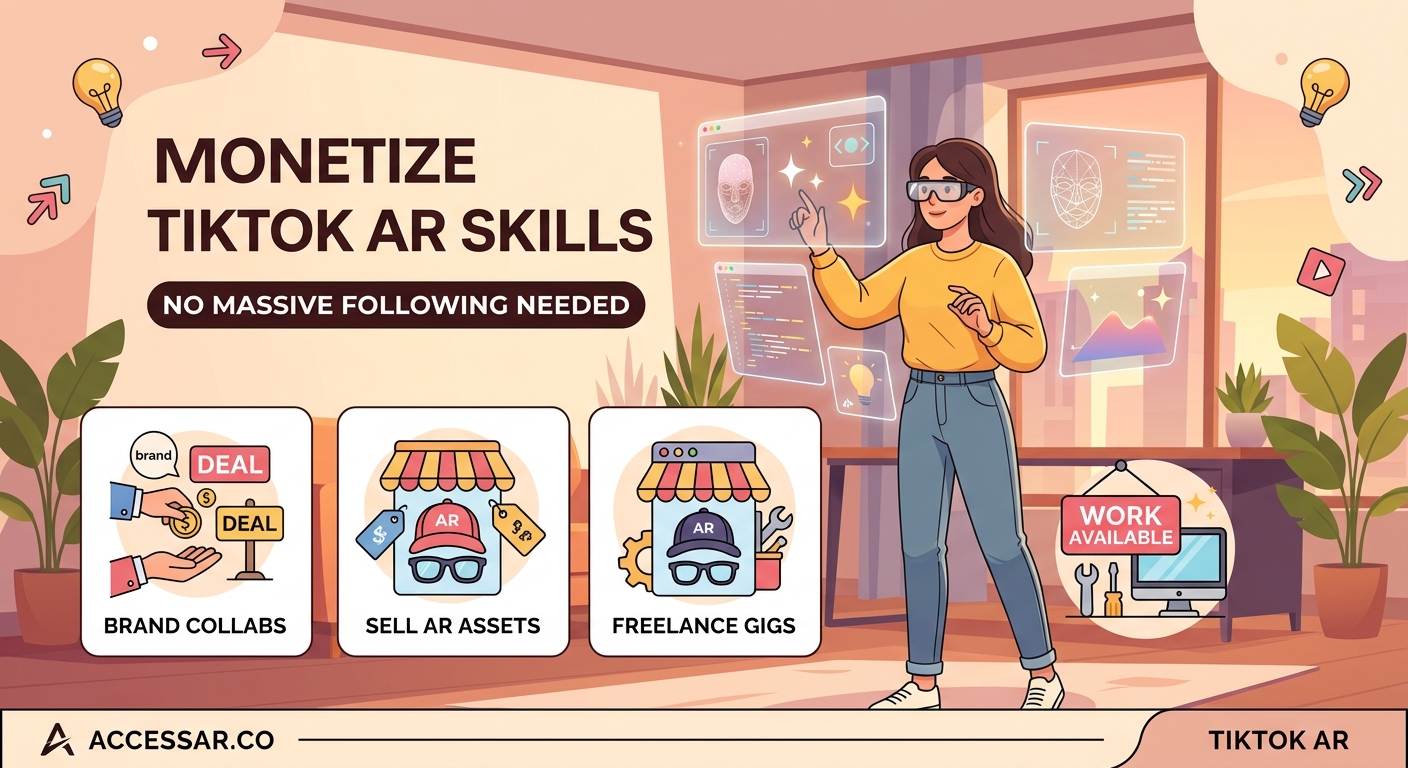
Before you can sell AR services, you need proof of capability. Here’s how to build that foundation without spending months growing an audience.
Create Portfolio Effects That Demonstrate Range
Your portfolio needs to show breadth and depth. Build effects across multiple categories to attract different client types.
Start with these portfolio pieces:
- Face tracking effect with custom animations
- World effect that places 3D objects in physical space
- Interactive game effect that responds to user actions
- Brand-ready template that could work for multiple businesses
- Trending effect variation that shows you understand platform culture
Each effect should solve a specific problem or create a specific emotion. Document your creation process with screenshots and brief explanations of technical choices.
If you’re just starting with effect creation, the complete beginner’s roadmap to publishing your first TikTok effect walks through the entire workflow from concept to publication.
Publish Effects Under Your Creator Name
Every published effect includes your creator profile link. When users tap to learn more about an effect, they see your name and can view your other work.
This creates passive discovery. Someone uses your effect, loves it, checks your profile, and finds your contact information for custom work.
Make sure your TikTok bio clearly states that you create custom effects. Include an email address or link to a simple contact form.
Document Your Process
Create behind-the-scenes content showing how you build effects. Screen recordings of your Effect House workflow, design decisions, and problem-solving moments all serve as proof of expertise.
You can post these as regular TikTok videos, but the real value comes from having them available when potential clients ask about your process. A three-minute walkthrough video answers questions before clients even ask them.
Five Ways to Monetize TikTok AR Skills Without Followers
Here are proven monetization strategies that work regardless of your audience size.
1. Freelance Platforms and Service Marketplaces
List your AR effect creation services on platforms where businesses actively search for creators.
Fiverr, Upwork, and Freelancer all have categories for AR and filter creation. Set up detailed service listings that explain what you offer, show portfolio examples, and clearly state deliverables.
Price your services based on complexity:
- Simple face filter with basic animations: $150-300
- Interactive effect with custom 3D assets: $400-700
- Complex branded campaign effect: $800-1,500+
Start with competitive pricing to build reviews, then increase rates as you gain testimonials and portfolio pieces.
2. Direct Outreach to Small Businesses
Local businesses rarely think about TikTok effects, but they respond well to concrete examples of how effects could work for them.
Create spec work (sample effects) for businesses in your area. Make a custom effect for a coffee shop, salon, or boutique, then reach out with a video showing the effect in action.
Your pitch should be simple: “I created this custom TikTok effect for your business. It’s ready to publish if you’d like to use it for your marketing. Here’s how it works.”
Many businesses will pay for the effect you’ve already created. Others will hire you for additional work. Some will pass, but that spec work stays in your portfolio either way.
3. Template and Asset Sales
Not every business needs a fully custom effect. Many want templates they can customize with their own branding.
Create effect templates with placeholder text, swappable logos, and adjustable colors. Sell these on platforms like Gumroad or as part of a simple website.
Package templates with tutorial videos showing how to customize them in Effect House. This serves beginners who want to create their own effects but need a starting point.
Price templates between $20-75 depending on complexity. The margin is lower than custom work, but templates sell passively while you sleep.
4. Agency Partnerships
Marketing agencies often win clients who need AR effects but lack in-house expertise. Position yourself as their go-to AR specialist.
Find agencies that serve industries where AR effects make sense: beauty brands, fashion retailers, event companies, food and beverage businesses.
Reach out with a simple partnership proposal. You’ll handle all AR effect creation for their clients at a set rate or revenue share. They maintain the client relationship and add AR to their service offerings.
This creates recurring work without you needing to find individual clients.
5. Educational Content and Courses
Teaching others how to create AR effects generates income while establishing your authority.
Start with free tutorials on YouTube or TikTok to build credibility. Once you have a small following of aspiring creators, offer paid courses or coaching.
Your course doesn’t need to be comprehensive. Focus on specific outcomes like building viral TikTok effect trends or creating effects for specific industries.
Price beginner courses around $50-150. Offer one-on-one coaching at $75-150 per hour for creators who want personalized guidance.
Comparing Monetization Strategies
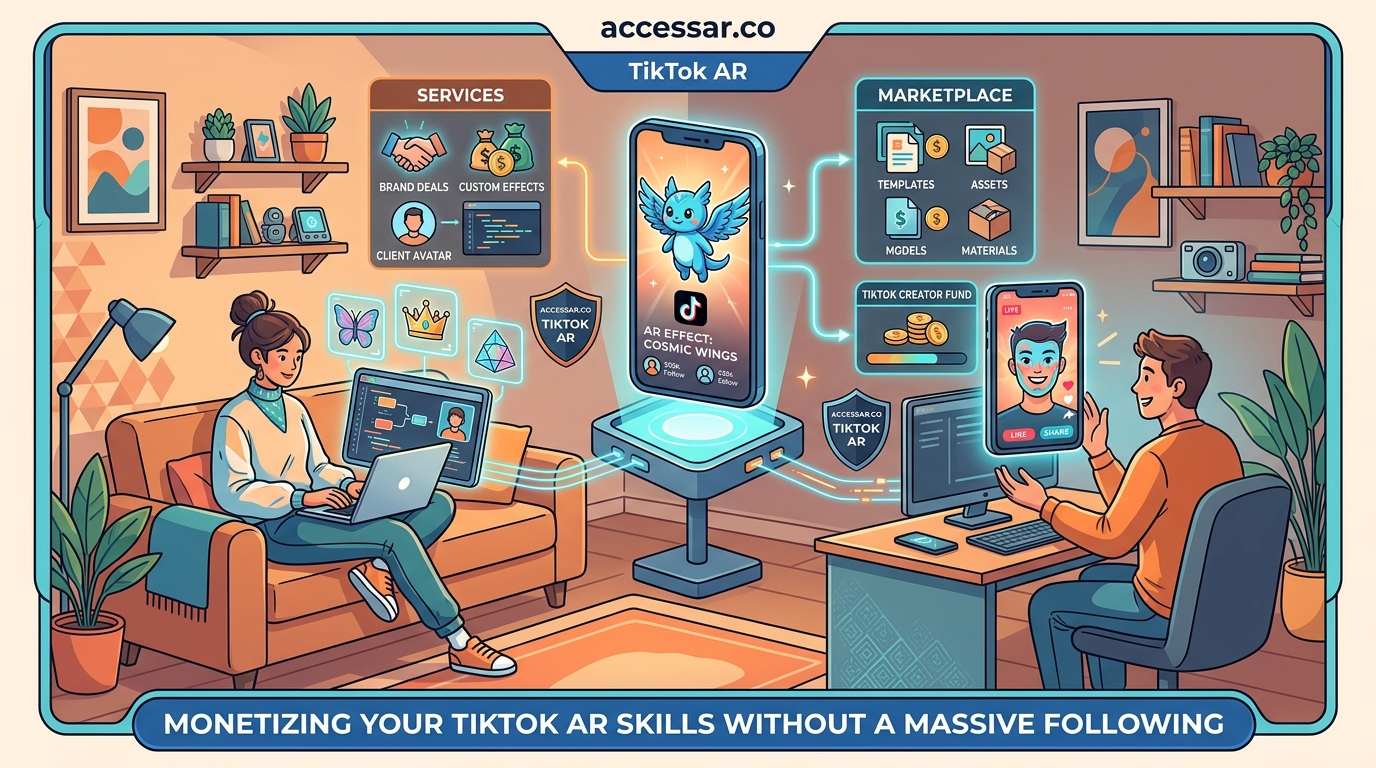
Different approaches work for different creators. Here’s how the main strategies compare.
| Strategy | Startup Time | Income Potential | Scalability | Client Acquisition |
|---|---|---|---|---|
| Freelance platforms | 1-2 days | $500-2,000/month | Medium | Platform handles discovery |
| Direct business outreach | 1 week | $1,000-5,000/month | Low | You find each client |
| Template sales | 2-4 weeks | $200-1,500/month | High | Passive after creation |
| Agency partnerships | 2-3 weeks | $2,000-8,000/month | High | Agency provides clients |
| Educational content | 1-3 months | $500-3,000/month | Very high | Content attracts students |
Most successful AR creators combine multiple strategies. They take freelance projects while building template libraries and occasionally teaching workshops.
Setting Your Rates and Avoiding Common Pricing Mistakes
New creators often underprice their work or struggle to communicate value to clients who don’t understand AR creation complexity.
Base Your Rates on Time and Complexity
Track how long different types of effects take to create. Include time for client communication, revisions, testing, and publication.
If a simple face filter takes four hours total and you want to earn $50 per hour, your minimum price is $200. Add 20-30% for project management overhead and potential revisions.
Complex effects with custom 3D modeling, advanced interactions, or multiple variations should reflect the additional hours required.
Communicate Value, Not Just Features
Clients don’t care that you used particle systems or custom shaders. They care about results.
Frame your proposals around business outcomes:
- “This effect will encourage users to share branded content”
- “The interactive element increases average engagement time”
- “This design matches your existing brand guidelines and can be reused across campaigns”
When you connect technical work to business goals, clients understand why they’re paying your rates.
Common Pricing Mistakes to Avoid
- Charging by the hour when you get faster with experience (use project-based pricing)
- Offering unlimited revisions (specify 2-3 revision rounds in your contract)
- Not requiring deposits (get 50% upfront for new clients)
- Pricing based on the client’s budget instead of your value (know your minimum acceptable rate)
- Forgetting to account for platform fees on freelance marketplaces (add 15-20% to cover fees)
Building Client Relationships That Lead to Repeat Work
One-time projects pay bills. Repeat clients build businesses.
The difference comes down to how you manage relationships beyond just delivering effects.
Exceed Expectations on Delivery
Deliver effects earlier than promised when possible. Include a brief video showing the effect in action with usage suggestions. Provide simple documentation for how to share and promote the effect.
These small additions cost you minimal time but dramatically increase perceived value.
Follow Up After Publication
Check in two weeks after an effect goes live. Ask how it’s performing. Share any user-generated content you’ve seen using the effect.
This shows you care about results, not just collecting payment. It also creates natural opportunities to discuss additional effects or modifications.
Offer Maintenance and Update Packages
TikTok updates Effect House regularly. Seasonal campaigns need refreshed effects. Brands change visual identities.
Offer quarterly maintenance packages where you update existing effects, create seasonal variations, or optimize based on performance data.
Price these at 20-30% of the original project cost. They provide recurring revenue and keep you top-of-mind for new projects.
Practical Steps to Land Your First Paid Project
Theory matters less than action. Here’s your step-by-step roadmap to earning your first dollar from AR effects.
- Create three portfolio effects in different categories (face tracking, world effect, interactive game).
- Publish all three effects on TikTok with clear descriptions and your contact information in your bio.
- Set up a simple portfolio page using free tools like Notion, Carrd, or a Google Site.
- Create service listings on two freelance platforms with detailed descriptions and portfolio links.
- Identify ten local businesses that could benefit from custom effects.
- Create one spec effect for a business you’d like to work with.
- Reach out to that business with your spec work and a simple proposal.
- While waiting for responses, join AR creator communities and offer to collaborate on projects.
- Document your creation process and share one tutorial or behind-the-scenes video.
- Follow up with businesses and freelance platform inquiries within 24 hours.
This process takes two to three weeks of part-time work. Most creators land their first paid project within 30-45 days of starting this sequence.
Tools and Resources That Speed Up Your Workflow
Efficiency directly impacts profitability. The faster you can create quality effects, the more projects you can handle.
Essential Software
Effect House is your primary tool for TikTok effects. It’s free and includes everything you need for professional work.
Supplement it with:
- Blender for custom 3D modeling (free)
- Figma for designing 2D assets and textures (free tier available)
- DaVinci Resolve for creating demo videos (free)
- Notion or Trello for project management (free tiers available)
You don’t need expensive software to create professional effects. Invest in skills before tools.
For creators working across multiple platforms, comparing Effect House vs Spark AR helps you decide where to focus your learning time.
Template Libraries and Asset Sources
Building everything from scratch wastes time. Use existing assets as starting points.
Effect House includes built-in templates and assets. Start there for common elements like particles, animations, and interactions.
For 3D models, Sketchfab offers free and paid assets with commercial licenses. Always verify licensing terms before using assets in client work.
The Snapchat Lens Studio templates approach works equally well for TikTok effects when you need to speed up your creation process.
Scaling Beyond Individual Projects
Individual client projects have an income ceiling. You only have so many hours in a week.
Scaling requires shifting from trading time for money to building systems that generate income with less direct effort.
Build a Template Marketplace
Once you’ve created 20-30 client effects, you’ll notice patterns. Certain effect types get requested repeatedly.
Turn these common requests into templates. Package them with customization guides. Sell them for $30-75 each.
Ten template sales per month at $50 each generates $500 in passive income while you work on higher-paying custom projects.
Train Junior Creators
As demand grows, you’ll need help. Find aspiring AR creators and train them on your processes.
Pay them 40-60% of project fees for effects they create under your guidance. You handle client relationships and quality control.
This lets you take on more projects without working more hours.
Create Subscription Services for Businesses
Offer monthly effect packages to businesses. They get 2-3 new effects per month for a flat fee.
Price these subscriptions at $400-800 per month depending on effect complexity. Five subscription clients generate $2,000-4,000 in predictable monthly revenue.
Avoiding the Most Common Beginner Mistakes
New AR creators make predictable mistakes that cost them time, money, and opportunities.
Mistake 1: Waiting until you’re “good enough” to charge for work
Your first paid project won’t be your best work. That’s fine. Clients at your current skill level exist and have budgets that match.
Start charging as soon as you can reliably deliver functional effects that meet client requirements.
Mistake 2: Undervaluing technical skills because you’re self-taught
Clients don’t care where you learned. They care that you can solve their problem. Self-taught creators often deliver better results than formally trained designers because they’ve solved real problems instead of completing academic exercises.
Mistake 3: Creating effects you think are cool instead of effects clients need
Your portfolio should showcase technical ability, but it should also demonstrate that you understand business applications. A brilliant artistic effect that serves no commercial purpose won’t attract paying clients.
Balance creative expression with practical, business-ready examples.
Mistake 4: Not having clear contracts and project scopes
Verbal agreements and vague project descriptions lead to scope creep, unpaid revisions, and client disputes.
Use simple contract templates that specify deliverables, revision limits, timelines, and payment terms. Protect yourself and set clear expectations.
For more guidance on avoiding beginner pitfalls, check out common mistakes every AR beginner makes for detailed solutions.
Your Skills Are More Valuable Than Your Follower Count
The creator economy has convinced everyone that audience size equals earning potential. For AR effects creators, that’s simply not true.
Businesses need specialized skills. They have budgets allocated for marketing tools and branded content. They’re actively searching for creators who can deliver specific technical solutions.
Your ability to create functional, engaging AR effects positions you to capture that demand. Start building your portfolio today. Reach out to your first potential client this week. Price your work based on value, not follower count.
The money is there. You just need to show up with skills and ask for it.