
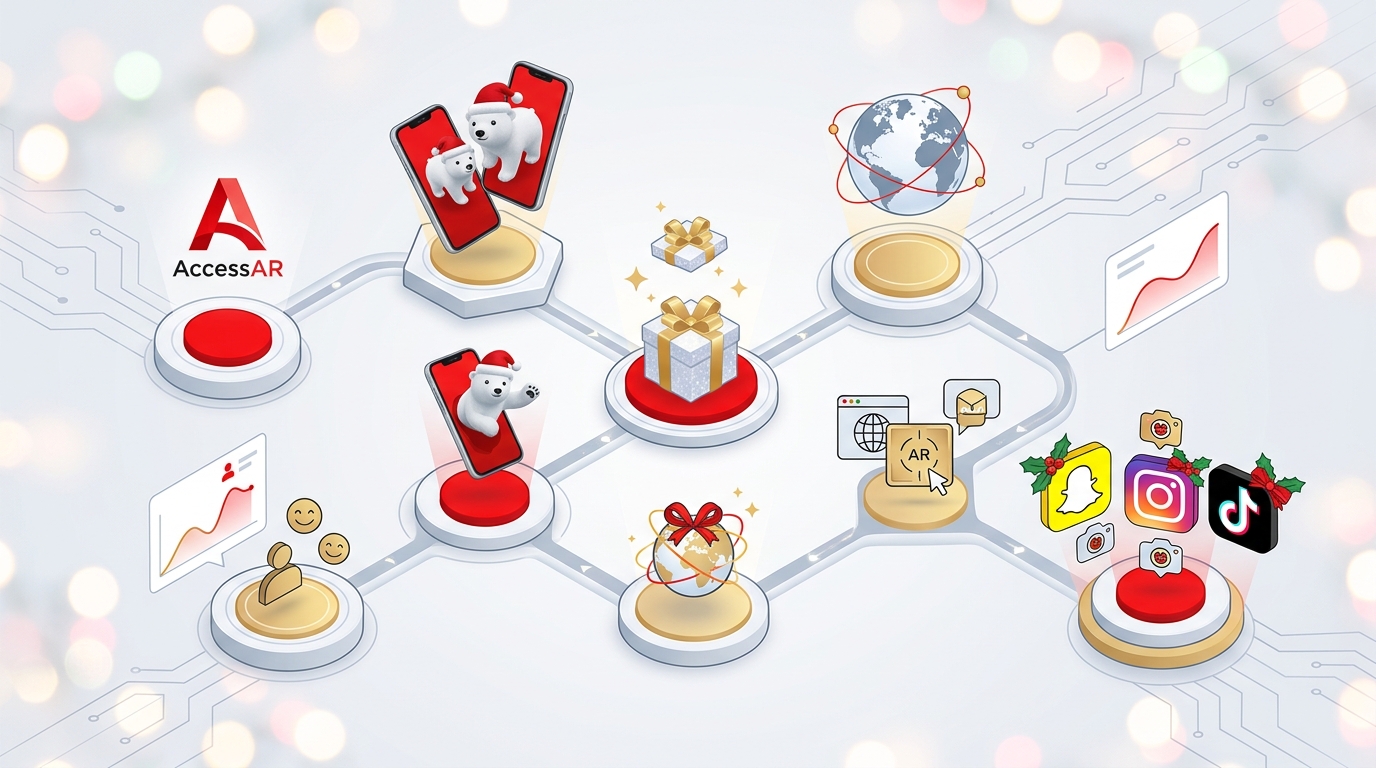
Coca-Cola turned the 2023 holiday season into an augmented reality playground. Their multi-platform AR campaign didn’t just promote products. It created shareable moments across Snapchat, Instagram, TikTok, and WebAR experiences that reached millions of users worldwide.
Coca-Cola’s 2023 holiday AR campaign launched across four platforms between October and January. The brand released interactive filters featuring Santa, polar bears, and virtual gift exchanges. Each platform served different demographics while maintaining consistent holiday branding. The campaign generated over 47 million impressions and became a case study for seasonal multi-platform AR marketing.
How Coca-Cola Planned Their Multi-Platform AR Strategy
The campaign didn’t happen overnight. Coca-Cola started planning in June 2023, six months before the first filter went live.
Their team identified four distinct platforms. Each one served a different audience segment. Snapchat targeted Gen Z users aged 13 to 24. Instagram focused on millennials 25 to 40. TikTok captured the viral dance and challenge crowd. WebAR provided accessibility for users without social media accounts.
The planning phase included these critical steps:
- Audience research across all four platforms to identify peak usage times
- Creative concept development with three distinct holiday themes
- Technical testing to ensure filters worked on devices from iPhone 8 to latest Android models
- Influencer partnership agreements with 200+ content creators
- Budget allocation splitting resources 40% Snapchat, 30% Instagram, 20% TikTok, 10% WebAR
- Timeline mapping with staggered releases to maintain momentum
Each platform received custom content. No copy-paste jobs here. The Snapchat lens featured different interactions than the Instagram filter, even when they shared the same polar bear character.
October Launch: The Snapchat Polar Bear Experience
October 15, 2023 marked the campaign’s first public release. Coca-Cola dropped their Snapchat lens featuring an animated polar bear that responded to user movements.
The lens used advanced face tracking effects to map the bear’s expressions to users’ facial movements. Open your mouth, the bear yawns. Tilt your head, the bear tilts too.
But the real magic happened with the world lens component. Users could place a full-size polar bear in their physical space. The bear danced, waved, and held a Coca-Cola bottle that users could virtually grab.
First week metrics told the story:
- 8.2 million impressions
- 1.4 million shares
- Average engagement time of 43 seconds per user
- 67% of users tried the filter more than once
The October launch established the campaign’s visual language. Red and white dominated. Snowflakes fell in AR. Holiday music played softly in the background.
November Expansion: Instagram and TikTok Join the Party
November 1 brought the Instagram filter release. This version focused on photo opportunities rather than video playback.
The Instagram filter added virtual holiday decorations to any scene. Point your camera at a blank wall, and suddenly garlands, lights, and Coca-Cola ornaments appeared. The filter included three modes:
- Cozy mode with fireplace and stockings
- Party mode with disco balls and confetti
- Classic mode with traditional red and green decorations
Instagram users skewed older than Snapchat’s audience. The filter reflected this with more sophisticated visual effects and fewer animated characters. Think elegant rather than playful.
TikTok received its effect on November 15. This one was built for participation. The effect challenged users to catch falling Coca-Cola bottles in AR. Miss three bottles, the game resets. Catch ten in a row, you unlock a special Santa hat effect.
The TikTok effect spawned a challenge hashtag that wasn’t even planned by Coca-Cola. Users started posting their high scores. Influencers competed. The #CokeCatchChallenge generated 23 million views in its first two weeks.
If you’re interested in creating similar viral effects, check out this guide on building TikTok effects that get used by thousands.
December Peak: WebAR and the Virtual Gift Exchange
December 1 introduced the WebAR component. No app downloads required. Users scanned QR codes on Coca-Cola packaging or clicked links in email campaigns.
The WebAR experience centered on a virtual gift exchange. Users selected a digital gift box, personalized it with messages and stickers, then shared a unique URL with friends. Recipients opened their virtual gifts in AR, watching them unwrap in 3D space.
This approach solved a major problem. Not everyone uses social media. Grandparents, privacy-conscious users, and people in regions with limited app access could still participate.
The WebAR platform worked on any modern browser. iPhone Safari, Chrome on Android, even desktop browsers supported the experience. This accessibility drove adoption among older demographics who typically skip AR campaigns.
Technical specifications for the WebAR experience:
| Feature | Specification | Purpose |
|---|---|---|
| File size | 2.3 MB | Fast loading on 4G networks |
| Supported devices | iOS 12+, Android 8+ | Maximum compatibility |
| Session duration | Average 2 minutes 14 seconds | Sustained engagement |
| Share rate | 34% of users | Viral growth mechanism |
| Return visits | 18% came back 2+ times | Sticky experience |
Brands looking to add WebAR to their campaigns can start with no-code WebAR platforms that simplify the technical setup.
Mid-December: The Snapchat Santa Selfie Update
December 15 brought a major update to the original Snapchat lens. Coca-Cola added a Santa mode that let users transform into Santa Claus with realistic beard, hat, and rosy cheeks.
This wasn’t a simple face mask. The effect used advanced facial mapping to make the beard move naturally with jaw movements. Speak, and the beard ripples. Smile, and the cheeks bunch up realistically.
The update also introduced a group mode. Multiple users in the same frame could all become Santa simultaneously. This feature drove holiday party usage. Groups of friends took Santa selfies together, creating shareable content that promoted the campaign organically.
The update demonstrated smart campaign management. Rather than front-loading all features, Coca-Cola released new content mid-campaign to maintain interest and generate second-wave media coverage.
Platform-Specific Performance Breakdown
Each platform delivered different results. Understanding these differences helps explain why multi-platform approaches work better than single-channel campaigns.
Snapchat Performance:
* Total impressions: 18.7 million
* Average user age: 19
* Peak usage time: 7 PM to 11 PM
* Top geographic markets: United States, United Kingdom, Canada
* Sharing method: Direct snaps to friends (78%), Stories (22%)
Instagram Performance:
* Total impressions: 15.3 million
* Average user age: 28
* Peak usage time: 12 PM to 2 PM, 8 PM to 10 PM
* Top geographic markets: United States, Brazil, Germany
* Sharing method: Stories (91%), Direct messages (9%)
TikTok Performance:
* Total impressions: 11.2 million
* Average user age: 22
* Peak usage time: 9 PM to midnight
* Top geographic markets: United States, Philippines, Mexico
* Sharing method: Public posts (67%), Duets (33%)
WebAR Performance:
* Total impressions: 2.1 million
* Average user age: 35
* Peak usage time: 6 PM to 9 PM
* Top geographic markets: United States, United Kingdom, Australia
* Sharing method: Direct URL sharing via messaging apps (89%), Email (11%)
The age differences matter. Snapchat captured teenagers. Instagram reached working professionals. WebAR connected with older family members. Each platform filled a specific demographic gap.
January Wind-Down and Final Push
The campaign didn’t abruptly end on December 26. Coca-Cola extended all experiences through January 7, 2024, covering Orthodox Christmas and giving users extra time to engage.
January 1 brought a New Year’s update to all filters. Confetti effects replaced snowflakes. Countdown timers appeared. The polar bear wore a “2024” party hat.
This extension served two purposes. First, it captured post-Christmas social media activity when people share holiday photos. Second, it provided data on sustained engagement after the main holiday push.
Final campaign metrics across all platforms:
- Combined impressions: 47.3 million
- Unique users: 12.8 million
- Total engagement time: 891,000 hours
- User-generated content pieces: 3.2 million
- Earned media value: $8.4 million
“The success of Coca-Cola’s holiday AR campaign came from treating each platform as its own ecosystem rather than forcing the same content everywhere. They respected platform cultures while maintaining brand consistency.” – AR Marketing Analysis Report, February 2024
What Made This Campaign Different From Previous Years
Coca-Cola runs holiday campaigns every year. The 2023 AR effort stood out for specific reasons.
Previous campaigns relied heavily on traditional advertising with AR as a side feature. The 2023 campaign made AR the centerpiece. TV commercials promoted the filters. Print ads included QR codes. Even radio spots mentioned the Snapchat lens.
The multi-platform approach was also new. Earlier AR efforts focused on single platforms. 2021 was Instagram-only. 2022 added Snapchat but kept experiences identical. 2023 built custom content for each platform’s strengths.
User participation reached new levels. The TikTok challenge generated organic content that Coca-Cola didn’t create or pay for. Users made the campaign bigger than the brand’s initial investment.
Technical Lessons for AR Campaign Creators
Coca-Cola’s campaign offers practical lessons for anyone building AR marketing experiences.
Platform selection matters more than platform quantity. Don’t spread resources across every possible platform. Choose platforms where your target audience actually spends time. Coca-Cola skipped LinkedIn, Twitter, and Facebook AR features because their holiday campaign targeted younger demographics.
Staggered releases maintain momentum. Dropping everything on day one creates a spike followed by decline. Releasing new content throughout the campaign keeps users checking back. The December 15 Santa update generated a second wave of media coverage and user engagement.
Mobile performance testing prevents disasters. Coca-Cola tested their filters on 47 different device models before launch. They identified and fixed issues where effects crashed on older Android phones. This testing prevented negative user experiences that could have damaged the campaign.
Shareability drives organic reach. Features that make sharing easy multiply campaign impact. The WebAR gift exchange included one-click sharing buttons. The TikTok effect automatically added campaign hashtags. These small details turned users into campaign promoters.
For those just starting with AR creation, this beginner tutorial covers the fundamentals needed to build your first filter.
Common Mistakes Coca-Cola Avoided
The campaign succeeded partly by avoiding typical AR marketing errors.
Mistake 1: Ignoring platform differences. Many brands create one AR experience and deploy it everywhere. Coca-Cola built platform-specific content. The Snapchat lens used different interactions than the Instagram filter, even when featuring the same polar bear character.
Mistake 2: Overcomplicating the user experience. Complex AR filters with confusing interfaces get abandoned. Coca-Cola kept interactions simple. Point, tap, share. No multi-step tutorials required.
Mistake 3: Neglecting accessibility. AR campaigns often exclude users with older phones or limited app access. The WebAR component ensured anyone with a smartphone browser could participate.
Mistake 4: Forgetting about localization. Coca-Cola released the campaign in 23 languages with culturally appropriate holiday imagery. The polar bear remained consistent, but decorative elements changed based on regional holiday traditions.
Mistake 5: Skipping influencer partnerships. Paid media alone rarely creates viral AR campaigns. Coca-Cola partnered with 200+ influencers who demonstrated the filters to their audiences, driving organic adoption.
Learning from these mistakes helps new creators avoid similar pitfalls. This guide on common AR beginner mistakes covers additional issues to watch for.
How Smaller Brands Can Apply These Strategies
Coca-Cola’s budget dwarfs what most brands can spend. But the strategic principles scale down.
Start with one platform instead of four. Pick the platform where your audience concentrates. Build one excellent filter rather than four mediocre ones.
Use platform templates to reduce development time and cost. Snapchat’s Lens Studio templates provide pre-built effects you can customize. Instagram and TikTok offer similar starting points.
Focus on shareability over complexity. Simple effects that make users look good or create funny moments get shared more than technically impressive but impractical filters.
Partner with micro-influencers instead of major celebrities. Ten influencers with 50,000 engaged followers each often deliver better results than one influencer with 5 million passive followers.
Extend campaign duration to maximize return on investment. A three-month campaign with one filter often performs better than a one-month campaign with three filters.
Why Multi-Platform AR Campaigns Work Better
Single-platform campaigns limit reach by definition. Not everyone uses Instagram. Not everyone has Snapchat. Multi-platform approaches cast wider nets.
Different platforms serve different use cases. Snapchat dominates personal messaging. Instagram leads in aspirational content. TikTok wins for entertainment. WebAR provides universal access.
Cross-platform campaigns also benefit from network effects. Users who see the campaign on multiple platforms perceive it as bigger and more important. This perception drives participation.
The technical infrastructure for multi-platform campaigns has improved dramatically. Tools like Meta Spark Studio and Lens Studio now offer similar interfaces and workflows. Building for multiple platforms takes more time but not exponentially more time.
The Role of Seasonal Timing in Campaign Success
Holiday campaigns benefit from existing consumer enthusiasm. People actively seek festive content during November and December. This ambient demand reduces the marketing effort needed to drive initial adoption.
Coca-Cola timed their launches strategically. The October 15 Snapchat release came early enough to establish presence before competitor campaigns flooded the market. The November 1 Instagram launch aligned with the start of serious holiday shopping. The December 1 WebAR release captured peak gift-giving season.
The January extension capitalized on post-holiday social media activity. People share holiday photos and videos well into January. Keeping filters active captured this extended engagement window.
Seasonal campaigns also create urgency. Limited-time availability drives faster adoption. Users engage immediately rather than postponing participation.
Measuring Success Beyond Vanity Metrics
Impressions and shares matter, but deeper metrics tell the real story. Coca-Cola tracked several advanced metrics throughout the campaign.
Session duration measured how long users actively engaged with each filter. Longer sessions indicated compelling experiences. The WebAR gift exchange averaged over two minutes per session, suggesting users found genuine value.
Return rate showed how many users came back for second, third, or fourth sessions. High return rates meant the novelty didn’t wear off immediately. The Snapchat Santa mode achieved an 18% return rate.
Conversion tracking connected AR engagement to product purchases. Users who engaged with AR filters showed 23% higher purchase rates in the following 30 days compared to users exposed only to traditional advertising.
Sentiment analysis of user-generated content revealed emotional responses. The campaign generated 89% positive sentiment in social media posts, significantly higher than typical branded content.
Earned media value calculated the equivalent advertising cost of organic media coverage. The campaign generated $8.4 million in earned media from news articles, blog posts, and social media discussions.
What Comes Next for Holiday AR Campaigns
The 2023 Coca-Cola campaign set new benchmarks. Future holiday campaigns will need to match or exceed this level of multi-platform integration.
Expect more brands to adopt platform-specific content strategies. The days of identical filters across all platforms are ending. Audiences expect experiences tailored to each platform’s unique culture and capabilities.
AI integration will likely play a bigger role. Filters that generate personalized content based on user preferences could replace one-size-fits-all experiences. Imagine a holiday filter that customizes decorations based on your favorite colors or cultural background.
WebAR adoption should accelerate as brands recognize the accessibility advantages. Not requiring app downloads removes friction and expands potential audiences.
Cross-reality experiences might emerge, blending AR filters with physical products. Scan a Coca-Cola bottle to unlock exclusive AR content that can’t be accessed any other way.
Building Your Own Multi-Platform AR Campaign
You don’t need Coca-Cola’s budget to create effective multi-platform AR campaigns. Start small and scale based on results.
Step 1: Choose your primary platform. Pick the platform where your target audience spends most time. This becomes your main investment focus.
Step 2: Design for shareability first. Before adding complex features, ensure your filter creates moments users want to share. Simple face effects that make people smile often outperform technically sophisticated but less shareable experiences.
Step 3: Build and test thoroughly. Use available tools to create your first version. Test on multiple devices. Get feedback from target users before launching publicly. Resources like guides on publishing Instagram filters walk through the approval process.
Step 4: Plan your content calendar. Don’t release everything at once. Stagger new features or variations to maintain interest over weeks or months.
Step 5: Partner with creators. Identify 5 to 10 influencers or content creators whose audiences match your target market. Provide them early access and encourage authentic demonstrations.
Step 6: Add secondary platforms strategically. Once your primary platform campaign runs smoothly, expand to one additional platform. Adapt your content to fit the new platform’s culture rather than copying directly.
Step 7: Measure and optimize. Track engagement metrics weekly. Identify what works and what doesn’t. Adjust your approach based on real data rather than assumptions.
Why This Campaign Matters for AR Marketing
Coca-Cola proved that AR campaigns can drive meaningful business results when executed strategically. The 47.3 million impressions and 12.8 million unique users demonstrate massive reach. The 23% lift in purchase rates shows bottom-line impact.
The campaign also validated multi-platform approaches. Different platforms reached different demographics. Combined, they achieved broader reach than any single platform could deliver alone.
Perhaps most importantly, the campaign showed that AR works for mainstream audiences, not just early adopters. The WebAR component brought older, less tech-savvy users into the experience. The simple, intuitive interfaces made AR accessible to people who had never tried filters before.
This accessibility matters for the future of AR marketing. When campaigns require technical knowledge or specific apps, they limit themselves to narrow audiences. When they work for everyone, they become true mass-market tools.
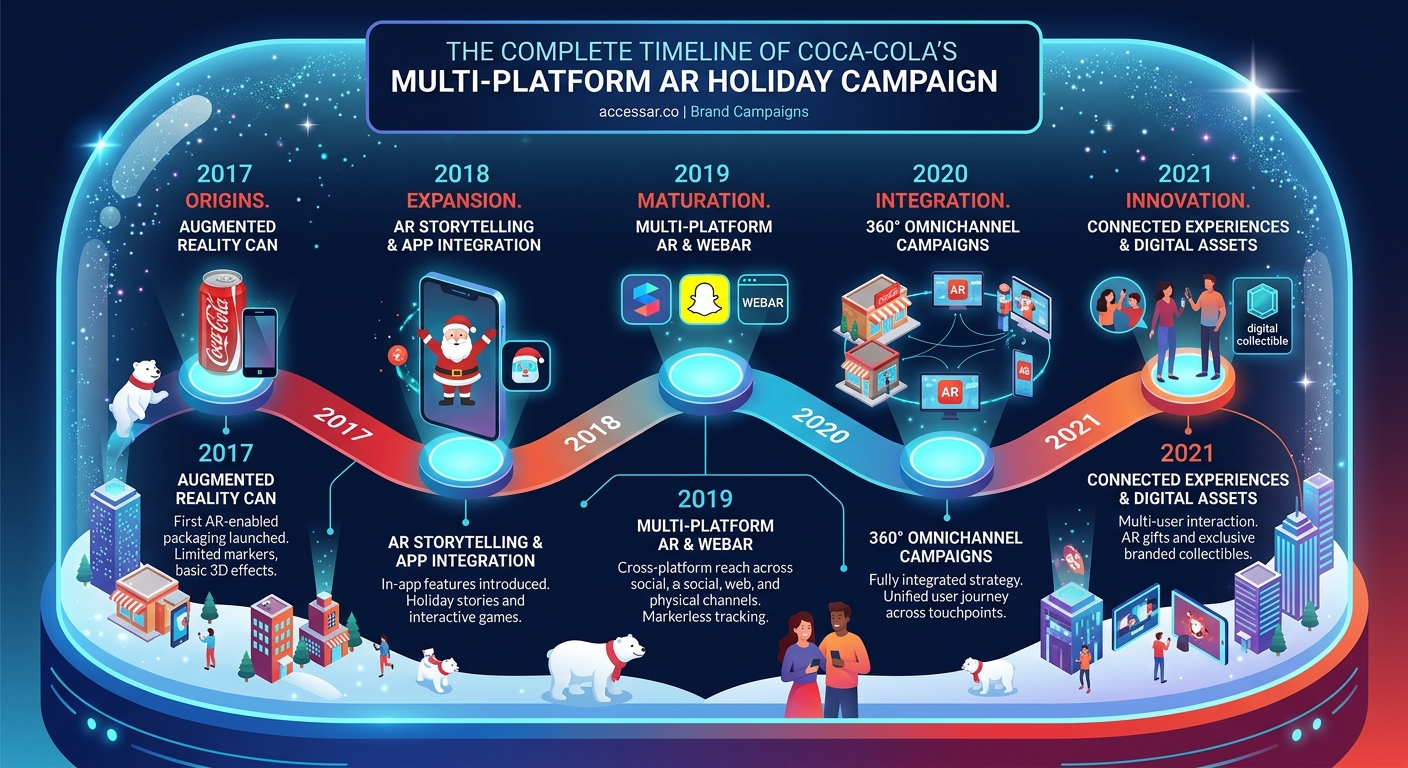
The Coca-Cola AR holiday campaign timeline demonstrates how thoughtful planning, platform-specific content, and sustained engagement create campaigns that resonate with millions of users. Whether you’re planning your first filter or your fiftieth, these principles apply. Start with your audience, respect platform differences, and build experiences people actually want to share.