
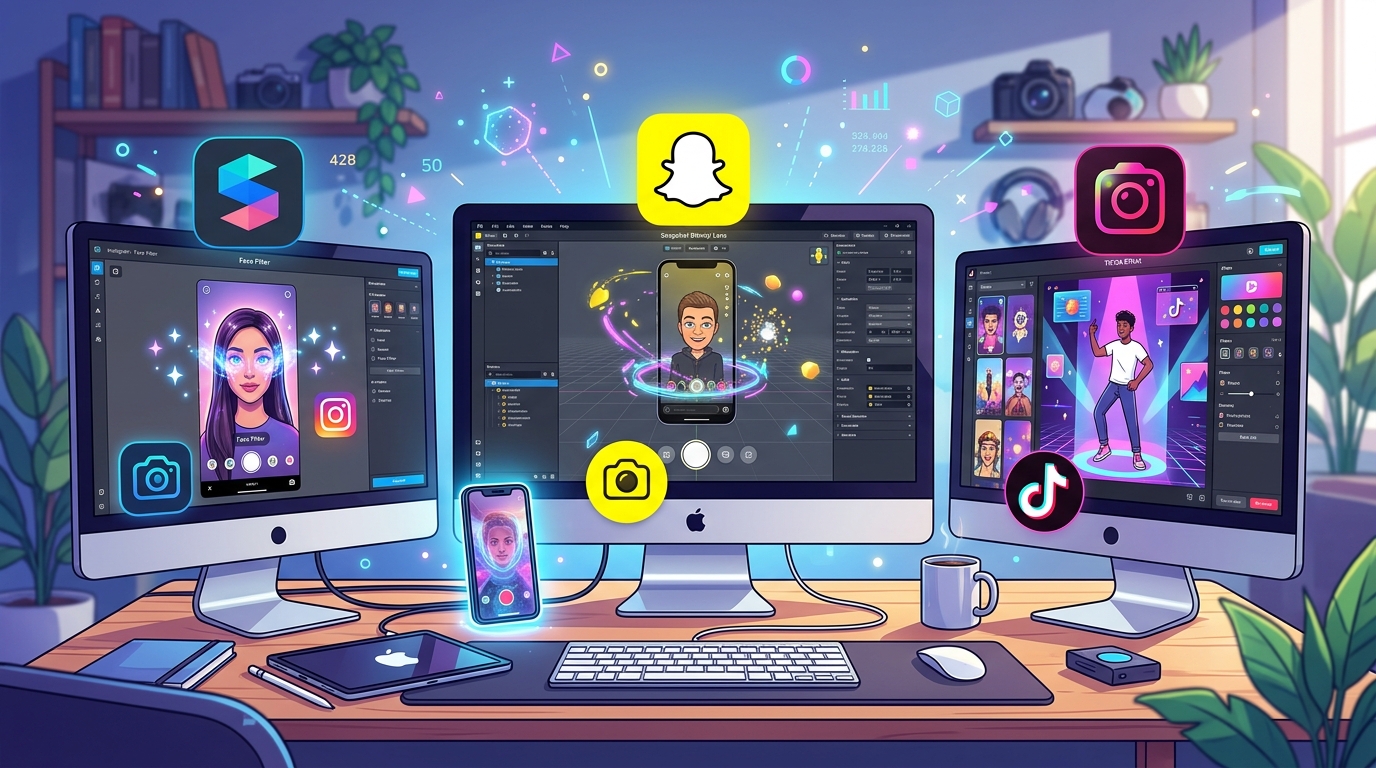
Choosing between Spark AR, Lens Studio, and Effect House feels like picking your favorite streaming service. Each platform promises creative freedom, but they deliver different experiences, cater to distinct audiences, and require varying skill levels. If you’re ready to create AR filters but stuck on which tool deserves your time, this comparison will help you make the right choice for your goals.
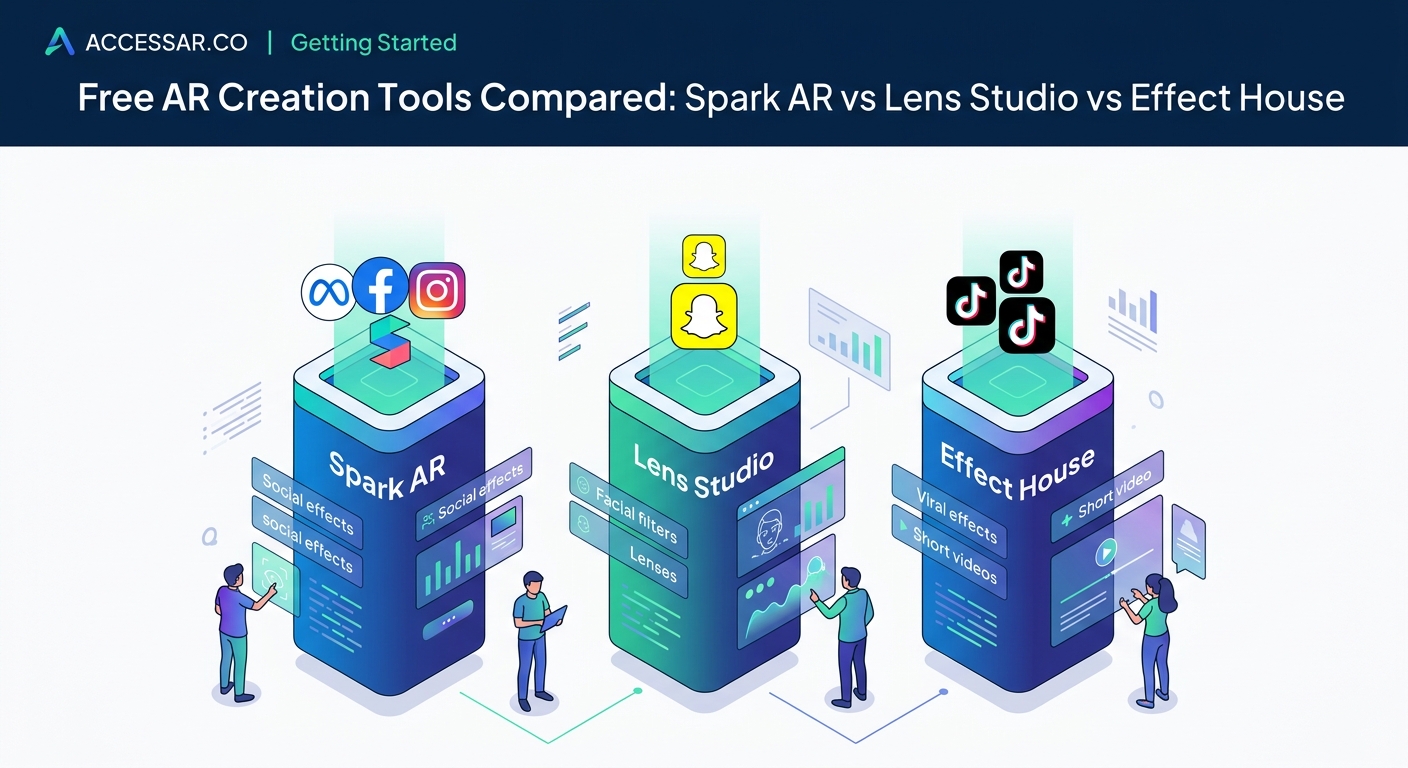
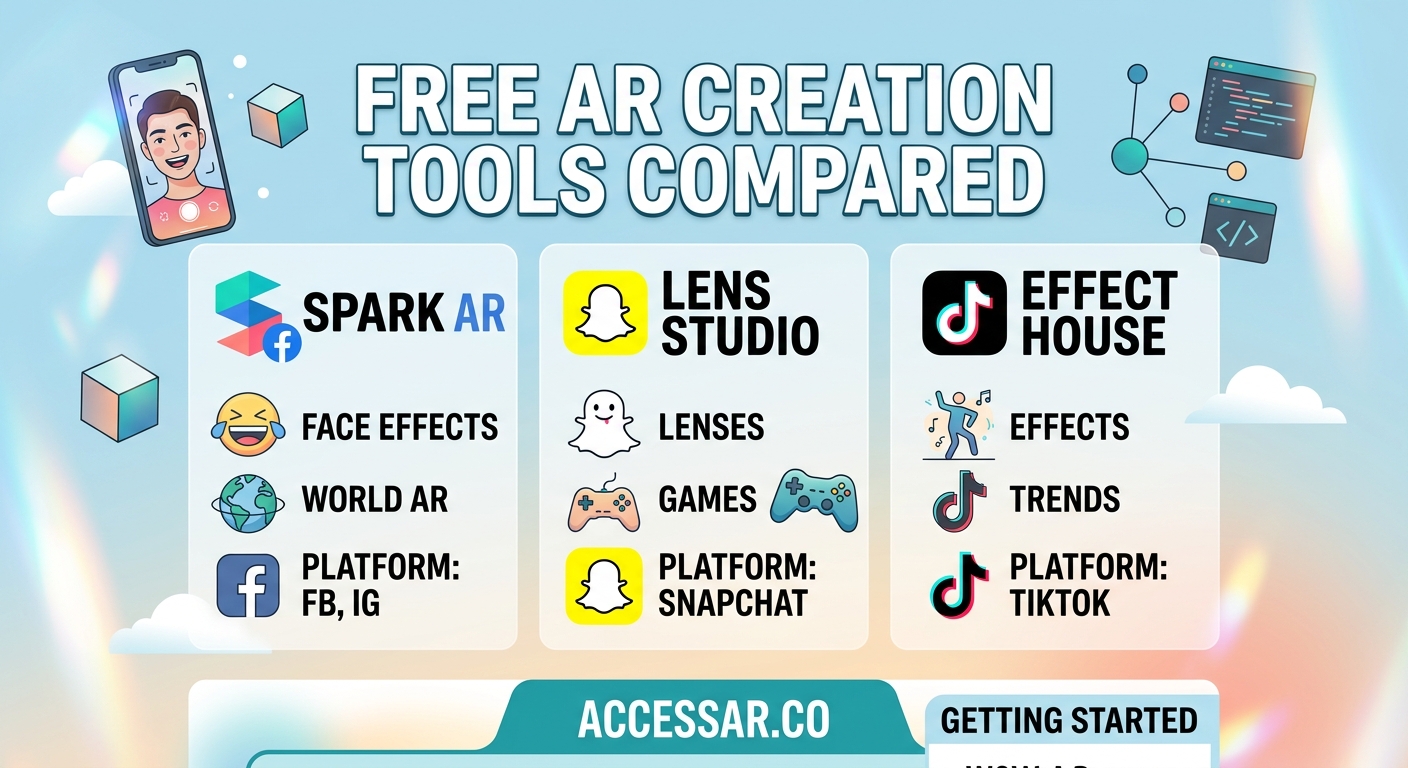
Spark AR (Meta Spark Studio) powers Instagram and Facebook filters with robust face tracking. Lens Studio dominates Snapchat with advanced 3D capabilities and gaming features. Effect House serves TikTok creators with trend-focused templates and simplified workflows. Your platform choice depends on your target audience, technical comfort level, and the type of effects you want to build. All three are completely free.
Understanding the three major AR platforms
Meta Spark Studio, Lens Studio, and Effect House represent the big three of social AR creation. Each platform ties directly to a specific social network ecosystem.
Spark AR belongs to Meta and publishes exclusively to Instagram and Facebook. Lens Studio is Snapchat’s native creation tool. Effect House launches effects only on TikTok.
This platform lock-in matters more than you might think. You can’t create an effect in Spark AR and publish it to Snapchat. You can’t build a Lens Studio project and push it to TikTok. Each platform uses proprietary formats, rendering engines, and approval processes.
The good news? All three tools are completely free to download and use. No subscriptions, no hidden fees, no premium tiers. The barrier to entry is your time and willingness to learn.
Platform-specific strengths and weaknesses
| Platform | Best For | Weakest At | Approval Time |
|---|---|---|---|
| Spark AR | Face filters, beauty effects, brand campaigns | Complex 3D world tracking | 1-3 days |
| Lens Studio | Advanced 3D effects, games, location-based AR | Beginner-friendly onboarding | 24-48 hours |
| Effect House | Viral trends, simple interactions, rapid prototyping | Advanced scripting flexibility | 12-24 hours |
Spark AR excels at face-based augmented reality. The platform’s face tracking technology handles makeup try-ons, color grading, and facial distortions with precision. Brands love Spark AR because Instagram’s massive user base drives impressions.
Lens Studio offers the most sophisticated 3D capabilities. You can build full AR games, create persistent world effects, and integrate machine learning models. The learning curve is steeper, but the creative ceiling is higher.
Effect House prioritizes speed and trend alignment. TikTok’s algorithm favors effects that match current viral formats, and Effect House templates make it easy to jump on trends fast.
Learning curve comparison for beginners
Starting with Spark AR feels like opening Photoshop for the first time. The interface is clean but packed with panels, nodes, and options. You’ll spend your first hour just figuring out where things live.
The patch editor (Spark AR’s visual scripting system) uses a node-based workflow. You connect blocks to create logic without writing code. This approach works well for visual thinkers but confuses people who prefer linear tutorials.
Lens Studio throws you into the deep end with more features upfront. The interface resembles a 3D modeling program more than a filter creator. Templates help, but customizing them requires understanding the scene hierarchy, materials, and scripting basics. If you’re comfortable with building Snapchat filters without coding skills, Lens Studio’s visual scripting will feel familiar.
Effect House wins the beginner-friendly race. The interface is simpler, the templates are more prescriptive, and the documentation assumes you’re starting from zero. You can build your first effect in under an hour without touching code.
“I tried all three platforms in one week. Effect House got me to a published effect fastest, but Lens Studio gave me the most creative control once I understood the basics. Spark AR sits somewhere in the middle for complexity.” – AR creator with 2M+ filter impressions
Step-by-step platform selection process
Follow this decision framework to pick your starting platform:
-
Identify where your target audience spends time. If they’re primarily on TikTok, start with Effect House. Instagram users? Go with Spark AR. Snapchat loyalists need Lens Studio.
-
Assess your technical comfort level honestly. Complete beginners should start with Effect House. People with design software experience can handle Spark AR. Those with 3D modeling or game development backgrounds will appreciate Lens Studio’s depth.
-
Define your first project type. Face filters work on all platforms but shine on Spark AR. World effects and games belong in Lens Studio. Trend-based effects and interactive challenges fit Effect House best.
-
Consider your long-term goals. Building a portfolio for brand work? Learn Spark AR first since Instagram drives the most commercial opportunities. Want to create cutting-edge AR experiences? Invest time in Lens Studio. Chasing viral moments? Effect House aligns with TikTok’s culture.
-
Test your choice with a simple project. Commit to building one complete effect from start to finish. If the process feels frustrating rather than challenging, switch platforms.
Template libraries and starting resources
All three platforms offer template libraries, but they serve different purposes.
Spark AR templates focus on common use cases like face retouching, color filters, and simple animations. The templates work well as starting points but often require significant customization to stand out. Meta provides solid documentation but assumes some technical literacy.
Lens Studio’s template collection saves hours of design time by providing pre-built games, try-on experiences, and interactive effects. The templates include more complex logic and 3D assets than other platforms. Snapchat’s creator community actively shares custom templates and tutorials.
Effect House templates align directly with TikTok trends. You’ll find templates for popular effect categories like face morphing, background segmentation, and gesture recognition. The platform updates templates regularly to match emerging trends, which helps creators stay relevant.
Publishing and approval differences
Each platform handles publishing differently, and approval times vary significantly.
Spark AR requires you to submit effects through the Meta Spark Hub. The review process checks for policy violations, performance issues, and technical problems. Getting your Instagram filter approved fast means understanding Meta’s content policies upfront. Rejections usually cite inappropriate content, misleading effects, or performance concerns.
Lens Studio submissions go through Snapchat’s review team. The approval process is generally faster than Spark AR but stricter about certain content types. Snapchat particularly scrutinizes effects that might encourage dangerous behavior or violate intellectual property rights. Understanding why your Snapchat lens isn’t getting approved helps you avoid common rejection reasons.
Effect House offers the fastest approval times but maintains strict content guidelines. TikTok’s review team focuses heavily on age-appropriate content and brand safety. The platform also monitors effects for potential misuse or harmful challenges.
Technical capabilities breakdown
Understanding what each platform can and cannot do helps set realistic expectations.
Face tracking capabilities:
– Spark AR offers 468 face mesh points and detailed facial feature tracking
– Lens Studio provides similar face tracking plus body tracking and hand tracking
– Effect House delivers solid face tracking but fewer customization options
3D object support:
– Spark AR handles 3D models well but limits file sizes aggressively
– Lens Studio supports complex 3D scenes with better performance optimization
– Effect House works with 3D objects but favors simpler geometries
Scripting and logic:
– Spark AR uses JavaScript for custom scripting beyond the patch editor
– Lens Studio employs JavaScript with more extensive API access
– Effect House uses a visual graph system with limited scripting options
Performance optimization:
– Spark AR enforces strict file size limits (4MB for most effects)
– Lens Studio allows larger files but requires manual optimization
– Effect House balances file size and complexity automatically
Real creator workflows and preferences
Talking to active AR creators reveals interesting patterns in platform choice.
Professional filter creators who work with brands typically master Spark AR first. Instagram’s reach and Meta’s business tools make it the most commercially viable platform. These creators often expand to Lens Studio for clients who want Snapchat presence.
Creators focused on viral growth and organic reach prefer Effect House. TikTok’s algorithm gives well-designed effects massive exposure without requiring an existing following. The platform’s approach to making effects that get used by thousands differs from Instagram and Snapchat.
Technical artists and 3D designers gravitate toward Lens Studio. The platform’s advanced features let them build experiences that blur the line between filters and full AR applications. Many use Lens Studio to prototype ideas before adapting them to other platforms.
Cross-platform strategy considerations
Many successful AR creators eventually work across multiple platforms, but starting with all three simultaneously is a mistake.
Master one platform thoroughly before expanding. Building deep expertise in a single tool produces better results than surface-level knowledge of all three. You’ll learn transferable concepts like face tracking, material properties, and user interaction design that apply across platforms.
Once you’re comfortable with your first platform, adding a second becomes easier. The concepts translate even if the interfaces differ. Many creators follow this progression:
- Start with Effect House for fast wins and viral potential
- Add Spark AR to access Instagram’s commercial opportunities
- Learn Lens Studio for advanced projects and differentiation
Some creators reverse this order based on their audience and goals. The key is intentional sequencing rather than scattered learning.
Platform-specific monetization paths
Each platform offers different paths to making money from your AR skills.
Spark AR creators typically monetize through client work, building branded filters for businesses. Instagram’s business-friendly ecosystem makes it easier to connect with brands. Filter analytics help demonstrate ROI to clients.
Lens Studio creators access Snapchat’s Creator Marketplace, which connects AR creators with brands looking for custom lenses. Snapchat also runs periodic creator funds and competitions with cash prizes.
Effect House creators benefit from TikTok’s Creator Fund and brand partnership opportunities. The platform’s viral nature means a single successful effect can lead to multiple client inquiries. Monetizing TikTok AR skills without a massive following is more achievable than on other platforms.
Common beginner mistakes by platform
New Spark AR users often overcomplicate their first projects. They add too many features, ignore performance warnings, and create effects that drain phone batteries. Start simple with face-based effects before attempting complex world tracking.
Lens Studio beginners underestimate the importance of testing on actual devices. Effects that run smoothly in the desktop preview often struggle on phones. Always test on the oldest device you expect users to have.
Effect House newcomers chase trends without understanding why certain effects go viral. They copy popular effects without adding unique value. Successful TikTok effects balance trend alignment with creative differentiation.
Analytics and performance tracking
Understanding how each platform reports effect performance helps you improve.
Spark AR provides detailed analytics through the Meta Spark Hub. You can track impressions, opens, captures, and shares. Instagram filter analytics reveal which effects resonate with users and which fall flat.
Lens Studio offers similar metrics through My Lenses dashboard. Snapchat’s analytics emphasize shares and screenshots, which indicate strong user engagement. The platform also shows demographic breakdowns.
Effect House analytics focus on views and usage time. TikTok’s metrics help you understand whether people discover your effect through search, recommendations, or creator usage. The platform also tracks which videos use your effect most successfully.
Making your final platform decision
Your choice between Spark AR, Lens Studio, and Effect House should align with three factors: your audience’s platform preference, your technical skill level, and your creative goals.
Choose Spark AR if you want to reach the largest potential audience, work with brands, or create beauty and fashion-focused effects. The platform’s connection to Instagram and Facebook gives your effects maximum distribution potential.
Pick Lens Studio if you’re interested in advanced 3D work, interactive games, or pushing technical boundaries. The platform rewards creators who invest time in learning its deeper capabilities. If you’re curious about advanced techniques for interactive games and challenges, Lens Studio provides the most robust toolkit.
Select Effect House if you want the fastest path from idea to viral effect, prefer trend-based creation, or target Gen Z audiences. TikTok’s algorithm gives new creators better discovery opportunities than more established platforms.
Getting started on your chosen platform
Once you’ve selected a platform, commit to building three complete effects before evaluating your choice. The first project teaches you the interface. The second reveals the platform’s quirks. The third shows whether the tool matches your creative style.
Download your chosen software and complete the official tutorial project. Don’t skip this step, even if tutorials bore you. The official projects teach platform-specific workflows that aren’t obvious from experimentation.
Join the platform’s creator community. All three tools have active Discord servers, Facebook groups, and forum communities where experienced creators help beginners. These communities share templates, troubleshoot problems, and announce new features.
Set a realistic timeline for your first effect. Plan for 5-10 hours of learning and building time. Rushing leads to frustration. Taking your time builds foundational knowledge that accelerates future projects.
Which platform deserves your attention first
The spark AR vs Lens Studio vs Effect House debate doesn’t have a universal answer. Your ideal starting point depends on where your audience lives, what you want to create, and how much technical complexity you’re ready to handle.
Start with one platform and build something real. Theory only takes you so far. The act of creating, publishing, and seeing people use your effect teaches more than any comparison article. Pick the platform that excites you most, commit to finishing one project, and adjust your strategy based on what you learn. The best AR creation tool is the one you’ll actually use consistently.