

TikTok creators face a confusing choice when building AR filters. Effect House is TikTok’s native tool, built specifically for the platform. Spark AR powered Instagram and Facebook filters before Meta shut it down in early 2023. That means if you’re choosing between these two platforms today, you’re actually choosing between Effect House and nothing, because Spark AR is no longer available.
But the comparison still matters. Many creators learned Spark AR first and want to know how Effect House stacks up. Others are deciding whether to switch from Instagram filter creation to TikTok effects. Understanding both platforms helps you make smarter decisions about where to invest your time.
Effect House is TikTok’s official AR creation platform, while Spark AR was discontinued by Meta in January 2023. Effect House now stands as the primary choice for TikTok creators, offering beginner-friendly templates, visual scripting, and direct publishing to TikTok’s billion-plus users. Former Spark AR users will find familiar features but a simplified interface designed specifically for short-form video effects.
What happened to Spark AR
Meta announced the shutdown of Spark AR Studio in January 2023. The platform stopped accepting new effect submissions that month. Existing filters continued working on Instagram and Facebook, but creators could no longer update or publish new ones.
This left thousands of AR creators scrambling for alternatives. Many moved to Lens Studio for Snapchat. Others switched to Effect House for TikTok. Some explored best no-code AR platforms for social media creators in 2024 to find new tools.
The shutdown wasn’t entirely surprising. Meta had been reducing investment in creator tools while focusing on the metaverse. Spark AR never achieved the same viral success as Snapchat’s lenses or TikTok’s effects.
For creators who built careers on Instagram filters, this was devastating. Years of learning curve, gone. Audiences built on specific effects, stranded. But it also created opportunity. TikTok’s Effect House became the obvious next step for many.
Why Effect House exists
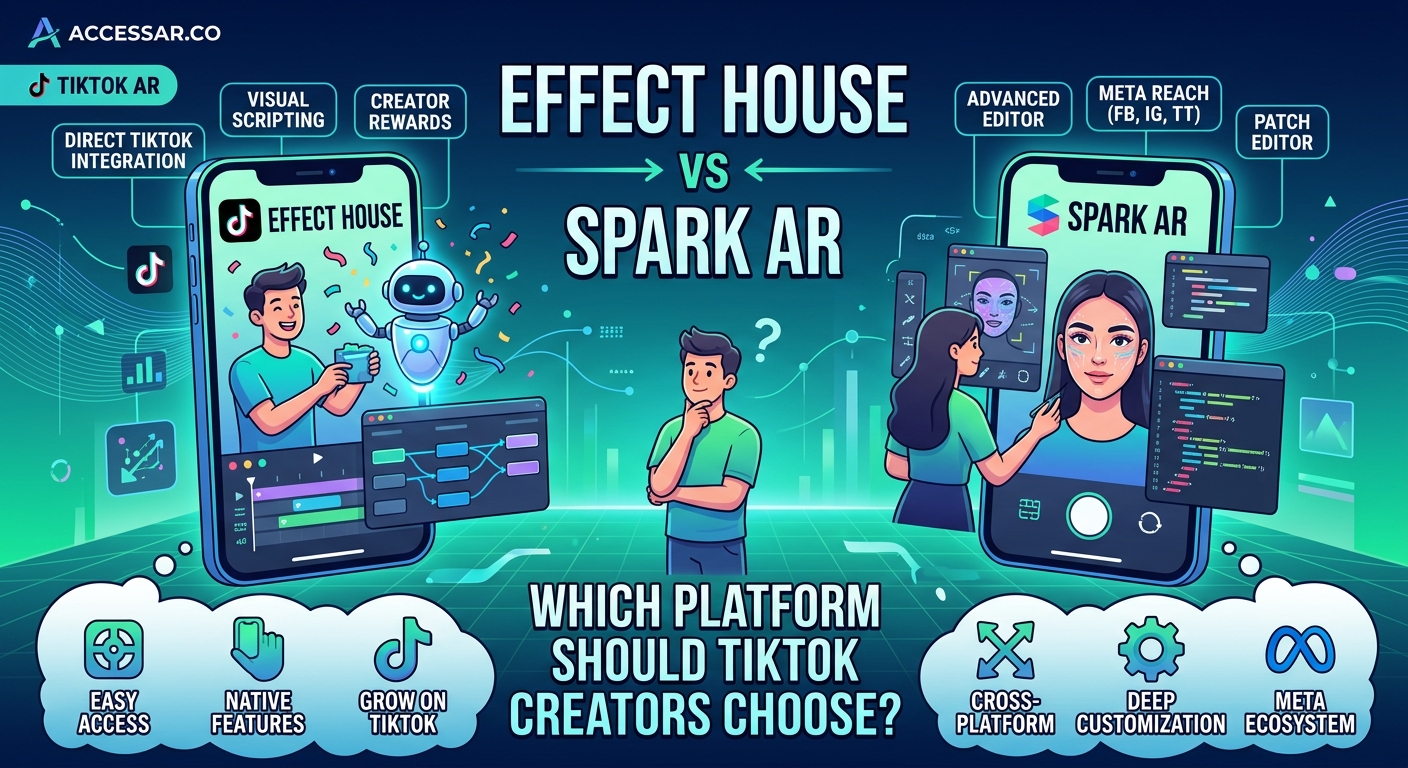
TikTok launched Effect House in 2021 to compete with Snapchat and Instagram. The platform wanted creators to build effects directly for TikTok instead of porting them from other tools.
Effect House is free to download and use. Anyone can create effects and submit them for approval. Once approved, effects appear in TikTok’s effect library where billions of users can find them.
The platform focuses on simplicity. TikTok knows most creators aren’t professional developers. Effect House provides templates, drag-and-drop tools, and visual scripting to make AR accessible.
This approach worked. Effect House effects regularly go viral, racking up millions of uses. The platform has created a new generation of AR creators who started with zero coding experience.
Feature comparison that actually matters
Here’s what you need to know about how these platforms differ:
| Feature | Effect House | Spark AR (Discontinued) |
|---|---|---|
| Platform support | TikTok only | Instagram, Facebook |
| Current availability | Active and supported | Shut down January 2023 |
| Learning curve | Beginner-friendly | Moderate complexity |
| Scripting language | Visual scripting + JavaScript | JavaScript only |
| Template library | 50+ starter templates | Limited templates |
| Face tracking | Advanced with 280+ points | Advanced with 126 points |
| Hand tracking | Full support | Full support |
| Body tracking | Full body segmentation | Limited body tracking |
| 3D import | FBX, OBJ, glTF | FBX, glTF |
| Community size | Growing rapidly | Frozen since shutdown |
The biggest difference is availability. You can’t choose Spark AR anymore because it doesn’t exist as a publishing platform.
But if you learned Spark AR and want to transition to Effect House, you’ll find the concepts transfer well. Both use node-based workflows. Both support custom 3D assets. Both offer face tracking and segmentation.
Effect House actually simplified several features that confused Spark AR beginners. The patch editor is cleaner. The preview window updates faster. Publishing is more straightforward.
Getting started with Effect House
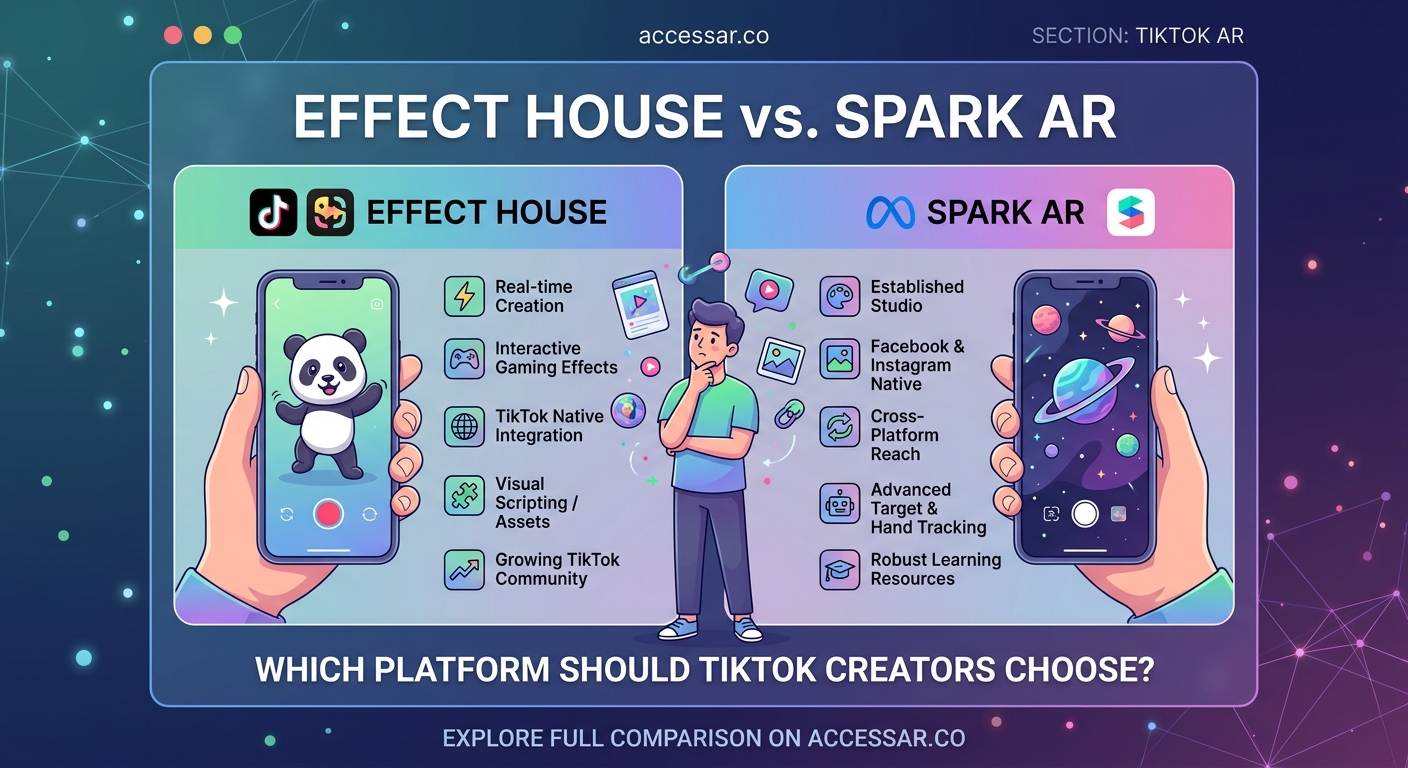
Here’s how to create your first TikTok effect:
- Download Effect House from the official TikTok website
- Install the software on Windows or Mac
- Open Effect House and choose a template
- Customize the template with your own assets or colors
- Test the effect using your webcam or phone
- Submit the effect for TikTok review
- Wait 3 to 7 days for approval
- Share your effect link once it’s live
The complete beginner’s roadmap to publishing your first TikTok effect walks through each step in detail.
Most creators start with templates. Effect House includes templates for face morphing, color filters, background removal, and interactive games. You can publish a customized template in under an hour.
“Start with templates, even if you think they’re boring. Understanding how templates work teaches you the logic of Effect House faster than starting from scratch.”
Once you understand the basics, you can build original effects from blank projects.
What Effect House does better
Effect House learned from Spark AR’s mistakes. The platform prioritized ease of use over advanced features.
Visual scripting blocks: You can build complex interactions without writing code. Drag blocks together like puzzle pieces. Connect triggers to actions. Add conditions and loops visually.
Faster preview: Effect House previews update in real time as you make changes. Spark AR often required manual refreshes. This speeds up iteration dramatically.
Better templates: Effect House ships with dozens of production-ready templates. Spark AR had basic examples but few polished starting points.
Clearer documentation: TikTok invested in tutorials, video guides, and example projects. The learning resources are more beginner-friendly than Spark AR’s technical documentation.
Direct publishing: You submit effects directly through Effect House. Spark AR required using a separate Hub app. One less tool to manage.
These improvements make Effect House the better choice for beginners. The platform removes friction at every step.
What Spark AR did better
Spark AR had advantages that Effect House still hasn’t matched.
Multi-platform publishing: One effect could work on Instagram and Facebook. Effect House only publishes to TikTok. If you want to reach Instagram users, you need a different tool now.
More mature community: Spark AR ran for years before shutting down. The community built extensive tutorials, asset libraries, and troubleshooting guides. Effect House’s community is newer and smaller.
Advanced shader support: Spark AR gave developers more control over custom shaders and materials. Effect House keeps things simpler, which limits what’s possible for advanced creators.
Established marketplace: Third-party creators sold Spark AR templates and assets. Effect House doesn’t have a mature marketplace yet.
For professional AR developers, Spark AR offered more power. But that power came with complexity that intimidated beginners.
Common mistakes when switching platforms
Creators moving from Spark AR to Effect House make predictable errors:
-
Overcomplicating effects: Effect House encourages simplicity. Don’t try to recreate complex Spark AR projects exactly. Simplify for TikTok’s fast-paced format.
-
Ignoring templates: Former Spark AR users often skip templates, thinking they’re too basic. Templates teach Effect House’s specific workflow patterns.
-
Publishing too early: Test effects thoroughly. TikTok’s review process is stricter than Instagram’s was. Rejected effects waste days of waiting.
-
Forgetting mobile performance: TikTok users have varied phone hardware. Effects that work smoothly on your computer might lag on older phones.
-
Skipping community feedback: Share work-in-progress effects in creator groups. Early feedback prevents wasted effort on effects that won’t resonate.
The 5 common mistakes every AR beginner makes and how to avoid them covers these pitfalls in more depth.
Which platform fits your goals
Your choice depends on what you want to achieve:
Choose Effect House if you want to:
– Reach TikTok’s massive young audience
– Start creating AR effects as a complete beginner
– Build effects that work with TikTok’s trending sounds and challenges
– Get effects in front of users without paid promotion
– Learn a platform that’s actively growing
You would have chosen Spark AR if you wanted to:
– Publish to Instagram and Facebook (no longer possible)
– Build AR shopping experiences for brands (moved to other platforms)
– Create effects for Instagram Reels (now requires different tools)
Since Spark AR is gone, the real question is whether Effect House fits your needs. If TikTok is where your audience lives, the answer is yes.
If you need to reach Instagram users, look at Meta Spark Studio vs Lens Studio which AR platform should you choose for current alternatives.
Building your first viral effect
TikTok effects go viral when they encourage participation. The best effects give users a reason to create content.
Face morphing effects work well. Color grading filters that match trending aesthetics perform consistently. Interactive games that challenge users get shared widely.
Study 7 viral TikTok effect trends you can build in Effect House this month to see what’s working right now.
The key is making effects that look good in videos, not just photos. TikTok is video-first. Your effect needs to enhance movement, not just static poses.
Test effects with different lighting conditions. Indoor, outdoor, bright, dim. TikTok users create content everywhere. Your effect should work in all conditions.
Learning resources that actually help
Effect House documentation is solid but dry. You’ll learn faster with these approaches:
Watch official tutorials: TikTok’s YouTube channel has step-by-step guides for common effect types. Follow along and build the same effects.
Join creator communities: Facebook groups and Discord servers for Effect House creators share tips, troubleshoot problems, and provide feedback.
Reverse-engineer popular effects: Download successful effects and study how they’re built. Effect House lets you import and examine other creators’ work.
Build daily: Even 20 minutes per day builds skills faster than weekend marathons. Consistency beats intensity for creative learning.
Share early and often: Publish effects even when they’re simple. Real user feedback teaches you what works better than any tutorial.
The learning curve is gentler than Spark AR was. Most creators publish their first effect within a week of downloading Effect House.
Technical requirements you need
Effect House runs on Windows 10 or later, and macOS 10.15 or later. You need a computer with a webcam for testing effects.
Minimum specs:
– 8GB RAM (16GB recommended)
– Dedicated graphics card (integrated graphics work but preview slower)
– 2GB free disk space
– Stable internet connection for publishing
You’ll also want a smartphone for testing. Effects often look different on phone cameras than webcams. Test on both before publishing.
No special camera equipment needed. Your phone’s front camera is enough. Professional creators might use ring lights for consistent testing conditions, but it’s not required.
Making effects people actually use
Publishing an effect is easy. Getting people to use it is hard.
The effect needs to solve a problem or enable creativity. Ask yourself: why would someone choose my effect over the thousands of others available?
Good reasons:
– It makes them look better in videos
– It creates a fun challenge they can share
– It matches a trending sound or meme
– It helps them express something they feel
– It’s visually striking and shareable
Bad reasons:
– You think it’s cool
– It demonstrates technical skill
– It took a long time to build
Users don’t care about your effort. They care about what the effect does for them.
Study how to make TikTok effects that actually get used by thousands for strategies that work.
What comes after your first effect
Your first effect probably won’t go viral. That’s normal. Most successful AR creators published dozens of effects before one took off.
Treat each effect as a learning opportunity. What worked? What didn’t? What feedback did you get?
Build a portfolio of effects in different styles. Face filters, background effects, interactive elements, color grading. Variety helps you find what resonates.
Track your stats in Effect House’s analytics dashboard. Views, uses, shares. These numbers tell you what’s working.
Some creators focus on quantity, publishing new effects weekly. Others focus on quality, spending weeks perfecting one effect. Both approaches can work. Find what matches your creative style.
The platform choice that matters now
Effect House vs Spark AR isn’t really a choice anymore. Spark AR is gone. Effect House is the platform for TikTok creators who want to build AR effects.
The real question is whether you want to create for TikTok at all. If your audience lives on TikTok, Effect House is the tool you need. If you’re targeting Instagram, you need different solutions.
For most creators starting today, Effect House is the smart choice. The platform is actively developed, well-supported, and reaches billions of users. The learning curve is manageable. The results can be spectacular.
Start with one simple effect. Publish it. See what happens. Then build another. The best way to learn Effect House is by creating, not by comparing it to tools that no longer exist.